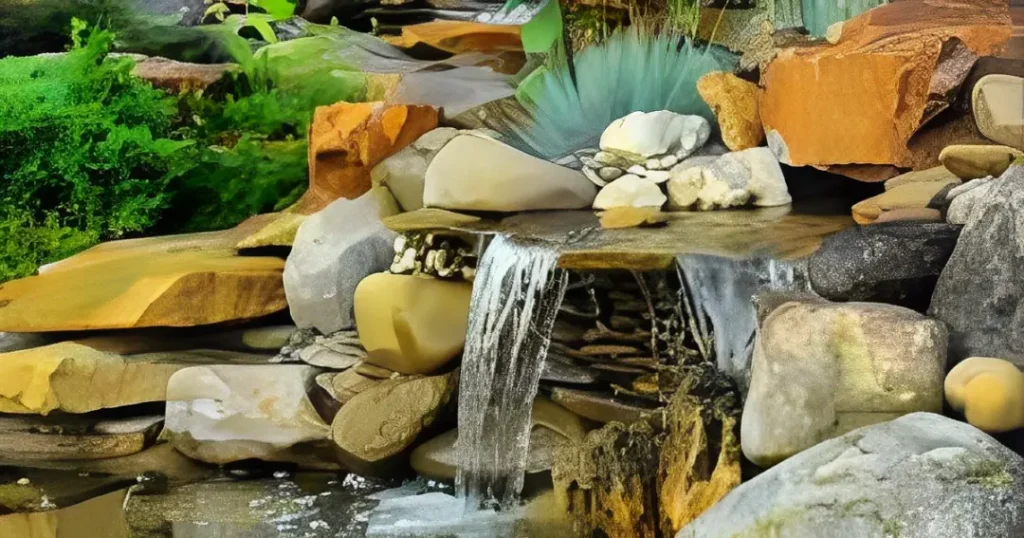
backyard pond and fountain maintenance, repair, and construction services for Aliso Viejo properties
Cement fountains are always a great addition to any property. They are low maintenance, while also typically very efficient due to their small pump size, and sometimes a great alternative water feature to have the tranquility of water on the property without breaking the bank.
Although, you’ll likely find that most fountains begin to develop fissures and cracks after a few years due to the elements like the sun and local atmospheric pressure adjustments. Additionally, If you have a decorative water fountain with a design like a gargoyle, custom tile, or unique rock installed on the fountain, some parts of it may break off, requiring custom repair from a company that understands fountain repairs.
The good news is, broken cement fountain repairs are usually easily accomplished by the typical DIY do-it-yourself homeowner in a short time and with little expense. After the repairs are made, you can re-seal your entire fountain with a clear sealant if you’d like.
If you’re good at painting, make your repaired fountain appear new with a fresh coat of non-toxic, water-friendly paint (which is also safe for Koi Fish or Turtles around your fountain).
Of course, you can always contact us for the help of a professional fountain contractor. We’ll make your custom fountain the centerpiece of your garden, Dr Office, or other commercial property. Fountains are a great addition to any walkway, entryway, courtyard, food court, backyard, and more.
Materials You’ll Need To Begin Repairs:
Absorbent cloth
Wire Brushes
Concrete Epoxy or Premixed Cement
Putty Knife
Plastic Trowel
Epoxy Mixing Plate
Duct Tape
Concrete Sealer
Vinegar
Brush
10 Steps To Repairing Your Cement Fountain And Water Pump
Initial Preparation
Turn off the fountain pump. Remove the water and dry the fountain. Examine the fountain and its basin for any breaks, cracks, or holes. Surface preparation is important in repairing small cracks and larger areas of concern on your fountain.
Cleaning the Fountain and Water Pump
At this stage, you can also start cleaning the fountain water pump, drainage system, and water feed hose to remove debris and concrete dust. Do it with a mixture of vinegar and water.
Add two cups of vinegar to standing water and start cleaning from the outside. Then dip the pump in the same mixture and let it run for around 30 minutes.
Absorb water and dry the concrete fountain using a good absorbent like a towel. Let it dry completely by allowing the water to evaporate through the cracks in the concrete for at least 24 hours.
Before you start the repair process, you’ll want to clean the area. You can use a wire brush to remove concrete dust, small particles of dirt, and any broken pieces of concrete that still remain on the cement fountain.
Use a finer wire brush to dislodge concrete from the joints at locations where designs are created and fixed on the fountain.
Preparing the Epoxy Mix
At this stage, you can use concrete epoxy or a patching agent like Liquid Nails to restore the broken cement fountain surfaces. You’ll have two tubes of the epoxy to mix before you apply.
Use a paper plate to create the mixture of hardener and a bonding agent. Use a plastic spoon to mix these differently colored ingredients on the paper plate until you achieve a consistent color.
Cement Adhesive Option
If you have a fountain with several tiers, you can use premixed cement from a hardware store to recreate your fountain.
Once you’ve cleaned the fountain, repair design elements like the gargoyle, wings, and complete other cosmetic work that you need to do in order to achieve symmetry in the different elements.
Filling in the Cracks
You can now use the plastic spoon to fill the smooth epoxy paste mix into the cracks or broken concrete. Fill the paste into the holes until it appears above the surface level.
Replacing Decorative Pieces
When you’re joining two surfaces, hold the dislodged surface in one hand and apply the adhesive on one side and then the other side that is intact on the fountain before you join the two surfaces together. Create an even surface by spreading the plaster with a plastic trowel until the surfaces are leveled.
Care must be taken to fill in enough epoxy paste to replace designs that were broken or dislodged during the repair process. The epoxy paste that you fill will be able to hold design pieces that you fix back onto the fountain once you’ve held them together for a period of at least two minutes.
Using Duct Tape
You can use duct tape to hold designs that are not level to the horizontal. When you’re satisfied that all the pieces are in place, wrap duct tape around the entire cement fountain to hold all the pieces together.
Drying Phase
Complete the repair by allowing the epoxy to dry off on the cement fountain for at least 24 hours.
Slowly remove the duct tape.
Applying Paint or Sealant
Use a brush to apply a concrete sealant like Rust-Oleum paint over the entire cement fountain. The purpose of using a concrete sealer or paint is to protect the cement fountain from the ultraviolet rays of the sun and also to prevent water from penetrating the repaired surface and causing fresh cracks over a period of time.
Completing Repairs
Again, let the concrete sealer dry off completely for at least 24 hours before you start the flow of water to your repaired cement fountain.
While a property owner can repair a cement fountain, it is always a good idea to seek professional help, especially when you’re struggling with some part of the repair process.
You’ll find that it is a better and more viable option in the long run, as the professional will be able to notice cracks that need repair before they cause more damage.
Final Thoughts
Regular maintenance by a professional team will ensure that your fountains remain in good shape, and you’re able to get repairs done at short notice.
We service both commercial and residential properties in California. From outdoor fountain maintenance services , fountain filtration, pumps, maintenance, and construction, to complete landscape renovations contact Koi Pros for a free quote today (714) 613-0123
There’s nothing more serene than having a water fountain, or any other sort of water feature in your yard. A lot of individuals simply love having an outdoor water feature by their garden or yard simply because it creates that calming vibe, not to mention, that it looks super good too. What a lot of people don’t enjoy, however, is maintaining their water fountain or other outdoor water features such as their koi pond. If you’re planning on having one installed, here are some of the frequently asked questions on water fountain maintenance and installation, as well as things that will make this dreadful process more bearable.
DOES MY WATER FOUNTAIN’S LOCATION MATTER WHEN IT COMES TO MAINTENANCE?
In a way, yes. To make sure that your water fountain doesn’t get wear and tear easily, it must be situated somewhere in your yard that doesn’t get too much foot traffic, but somewhere visible enough so you can admire it. Take note, that if you decide to install your water fountain in a dry area, you’ll find that you’ll be cleaning it more often than when it’s in an area where it gets wet.
If you have little to no garden space, you may also opt to have a water fountain installed in your patio. Aside from the fact that it makes your patio look more aesthetically pleasing, it has also been proven to help in the absorption of noise pollution. The point is, regardless of where you’re planning on installing your water fountain, you have to make sure that it’s away from areas that could be typically knocked over either by pets, little kids or even adults.
Another factor that needs to be taken into consideration concerning water fountain maintenance is the debris and sunlight. If you have decided to place it somewhere where tree leaves may fall, you’ll find yourself with a fountain that has more algae blooms – which means that you’ll have to clean it more often.
Before having a water fountain installed, you can always ask the professionals for advice on where your fountain can be best placed. While the final say still depends on you, considering their advice might not just be a bad idea afterall.
HOW DO I PROLONG MY FOUNTAIN’S LIFE?
The life and heart of every water fountain lie on the fountain pump. With that being said, to prolong your fountain’s life, you have to take the time to make sure that your pumps are well-maintained. Unlike other types of pumps, fountain pumps are more prone to getting debris and clogs, so you must take them out of your fountain and have it regularly cleaned.
Don’t forget to also get rid of the sand, leaves, dirt, grass and other debris that may have fallen on your fountain.
MY FOUNTAIN IS LEAKING, WHAT SHOULD I DO?
The first thing that you have to do is to find the leak. If your fountain base starts to leak, but no visible cracks can be found, you may want to let it sit for a week or two, until the cracks become visible. Once this happens, make sure that you keep the water 3/4 full.
If you own stone or fiberglass water fountains, these leaks can be covered with a clear Silicone II. Look for the source of the leak and cover it up from the inside of the fountain.
WHY DO I SEE WHITE RESIDUES ON MY FOUNTAIN?
These white residues are commonly referred to as the white scale. This is simply caused when you have hard water, thus, the calcium build-up. Don’t worry – you can easily get rid of the calcium build-up by gently rubbing the affected area with white vinegar. Run the fountain and you’ll notice that the build-up will go away.
You can also consider checking out different fountain care products that help keep the cleanliness of your water, thus, prevents white scales.
HOW DO I WINTERPROOF A FOUNTAIN?
Before winter even arrives, make sure that you are fully prepared and the first step is by making sure that water is fully drained from the fountain, followed by unplugging the fountain pump. Make sure to take it out and keep it in a heated area. Since your fountain will be exposed, make sure that you cover it up during the winter months so that snow and other falling debris won’t fall in. In general, your water fountain won’t freeze, especially if it’s made up of fiberglass. Fiberglass is usually the top choice of most individuals as they winterproof and can withstand cold weather conditions.
Remember, drain your water fountain to make sure that the water won’t freeze. This will also prevent your fountain from contracting and expanding. If this happens, you’re most likely to notice cracks in your fountain.
If you’re not sure how you can properly winterize your water fountain, make sure that you reach out to your fountain maintenance professionals.
WHAT’S THE PROPER WAY OF CLEANING MY FOUNTAIN?
Water fountain cleaning and maintenance depends on the material the fountain is made of. It can be either copper, ceramic, or stainless steel. Depending on the materials, here are some quick tips on how you can clean your fountain.
Copper Fountains: With a soft cloth and furniture cleaning product, gently rub your fountain.
Ceramic Fountains: Use a sponge or any soft cloth and clean it with clean and soapy water.
Stainless Steel Fountains: With a stainless steel cleaner, gently clean the fountain with a dry cloth.
If you’re not familiar with the fountain material, do not hesitate to seek help from outdoor fountain maintenance services.
WHEN IS IT TIME TO HIRE PROFESSIONALS?
You probably know by now that proper maintenance is the key to keeping your fountain looking good, and this means that you have to regularly clean the fountain. If you can’t find the time or can’t do it yourself, this might be the right time to hire a water fountain maintenance professional to help you with these kinds of tasks.
Additionally, always call the professionals when you’ve noticed that your fountains have problems that can’t be typically fixed on your own. If you don’t have any idea about what to do or haven’t had any experience fixing water fountains, it’s best to leave it to the experts. You might do more damage than fix it if you simply do it yourself even without proper knowledge.
HOW CAN I KEEP THE WATER IN MY FOUNTAIN CLEAN?
Outside debris, combined with sun and pollen may result in an algae formation and bloom. How much algae grows in your outdoor fountain depends on you – on how often you clean the fountain, and on how you clean the water. There are products you can easily buy out there to keep your water clean, and one which is readily available out there is hydrogen peroxide. One tablespoon per one gallon of water is enough – and make sure that you add this twice a month. Hydrogen peroxide is an effective product that’s free from harsh chemicals.
Avoid using chlorine-based water treatments, especially if you have a stainless steel fountain. They’re considered to be corrosive and can make your fountain’s inner connections, tubings and pump brittle. It may also cause discoloration to your fountain.
Again, if you’re not sure about how you can clean and properly maintain your fountain, make sure that you leave it to the experts.
IS IT POSSIBLE TO ADD KOI FISH & TURTLES TO MY FOUNTAIN?
A lot of people who’ve opted to get water fountains add fishes in theirs. It adds a more calming and serene vibe.
One of the most common fishes that are added to fountains is koi fishes. Just make sure that you don’t add them immediately after installation. Make sure that you give it some time to cure and for the minerals to be completely released before adding fishes. Depending on how fast the curing process is, adding fishes to your fountain in between 1 – 12 months of continuous use is ideal.
Take into consideration that some fishes are pH-sensitive. If you’re unsure, always consult a vet before adding fishes to your water fountain.
Tricky waterfalls, recycled watering cans, and captivating outdoor fountains. These 17 outdoor water features will provide an idyllic ambience right in your backyard, commercial courtyard, food court, and more. From small ponds and recycled plastics to luxurious stones, the possibilities with water features are endless and can be built to suit every outdoor space.
We often receive questions like – What is the typical cost for custom landscape design, including a fountain? What do you suggest we go with – Pondless Fountain? Maybe a Tiered Fountain? Wet-wall fountain? What if we have kids or animals? Help!?
That’s why we decided to write this article and wanted to cover everything related to outdoor brick fountain ideas. For the skilled do-it-yourselfer, many water fountain projects make great DIY projects, which will be outlined below. In addition to this, we will also give you some great water features and landscaping ideas in case you want to hire a professional fountain design and construction service for your next big project.
Are you trying to cover up that late-night highway noise, or maybe that loud dog down the street who seems to bark at everything? Possibly considering a backyard fountain offering soothing and relaxing noises for your Yoga sessions?
Our wet-wall and custom fountain ideas outlined below will be helpful in establishing a solid plan of attack for creating a stunning focal point in your residential and commercial entryways, and front yards, or for enjoying when kicking back on your backyard patio, under a beautiful cedar-wood pergola we installed.
A Moorish-Style Wall Fountain Completed with Tiles
A stunning backdrop will enhance a water wall in any style. This area is covered with hand-painted Mexican tile and glazed tiles of the Moorish style. The water flows gently to a semicircular pool topped by cobalt and yellow mosaic tiles. Bring an additional flair to your wall fountain using a beautiful accent piece, such as a sunflower positioned on your tiles. This can be the focal point of your water feature in the yard. Come up with outdoor brick fountain ideas for a small pool with one lower basin or even two basins.
Caterina Tiered Fountain
A Caterina tiered fountain is an impressive two-tiered outdoor water fountain with a traditional tier. This 52-meter-high pedestal waterfall will make the perfect focal point of your formal landscape in an outdoor space. Stream water flowing from the acorn-shaped finial splashes into an encircled basin and flows slowly over the edge toward the bottom basin. The outdoor fountain basin is just 3 feet tall and features Tuscan motifs that are ideal in both modern and traditional waterfall gardens. You can choose 14 finished outdoor fountain surfaces hand painted with natural and weather-tolerant colors for any garden.
Tiered Water Fountain
This outdoor fountain has two sides that are ideal for the front yard or for the garden. Come up with some fountain ideas with clean lines. Start with the garden fountain in your backyard pond. DIY scale: If you use a set of containers and hoses to add character to a tiered water fountain in your backyard, you’ll have the perfect solution for a garden fountain with running water. It will make this into a simple and fun water wall DIY project. Depending on the design of the outdoor fountain in your backyard, you may need professional help with additional fountain ideas. Pricing: A low-quality outdoor fountain can cost around $1,100, and a high-quality outdoor fountain is priced at around $7,500 for excellent design and installation. Outdoor space landscape advice: Brighten your cascade-dwelling waterfalls with bright flowers on the edge of the water feature. The vibrant flowers become the focal point of a garden pool with running water.
Japanese-Influenced Fountain like A Concrete Zen Garden
Fountains can be added to the landscape in different ways. The Japanese-inspired outdoor fountain is a perfect complement to the stone-framed lake. The sheets of water on the edge of this water feature capture the sun and provide calming sound. The water spouts out from the surface of the stone and then flows out of the water to the pond or basin at the bottom.
Small Fountains Can Have a Big Impact On A Property
Fountains can be used in many different landscape types and sizes. Running water on a water wall sounds calm and provides visual enjoyment to guests. Blue-painted bricks form round patterns around the pillars of the garden fountain that make blue-gray water a focal point. Cool colors complement nicely the flowering trees that surround the water feature. You can always add several such small fountains in front of the patio for your guests.
Navonna Outdoor Water Fountain
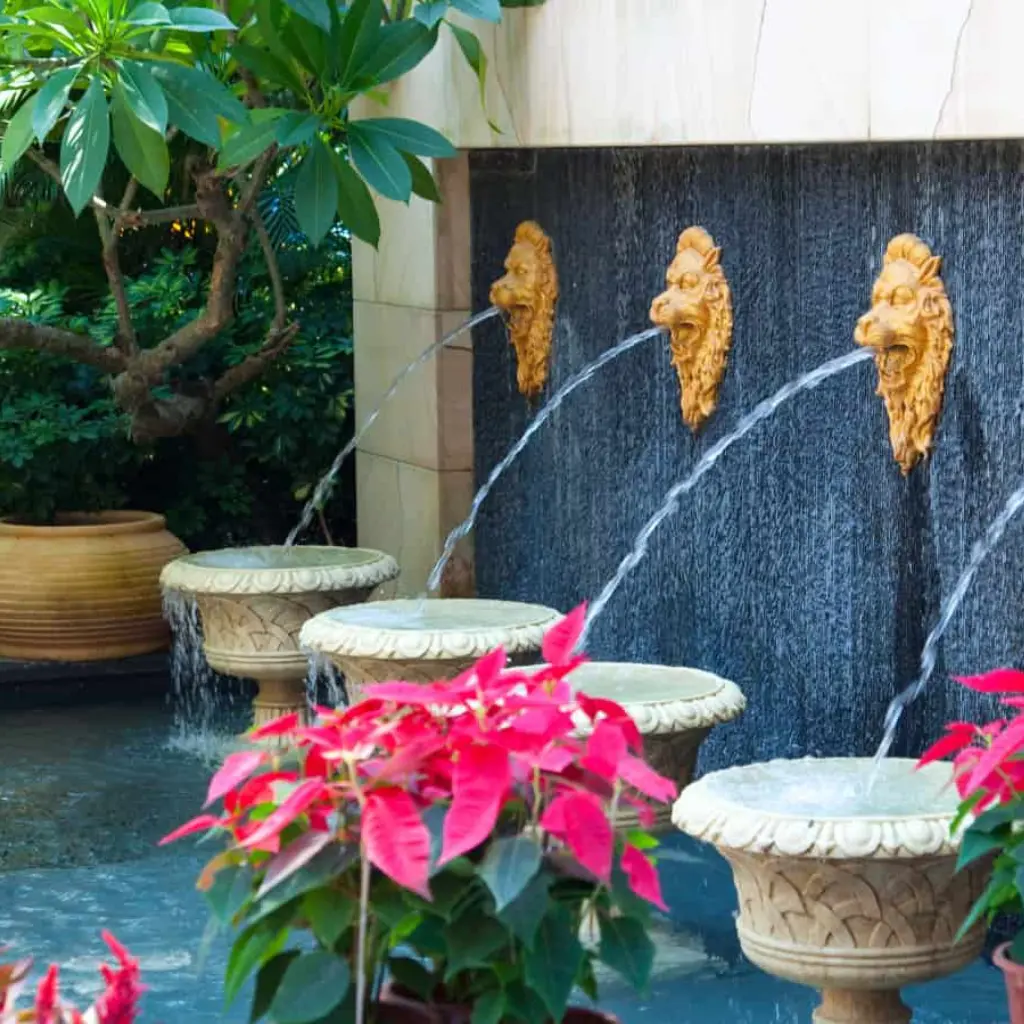
Its large splash pool and lower height make it the most elegant centerpiece of the garden and patio. An elegant one-piece basin has an oval base surrounded by a decorative panel in Classical Italian fashion. This outdoor fountain basin is topped with bubbling pipes, and four straight pipes create dramatic flowing, splashing water that runs from each side of the swimming fountain. Unlike ornamentation, this water feature provides the ideal way to create a Mediterranean feel to your landscape. This fountain has 14 hand-painted finishes for modern and rustic designs and is made of cast concrete.
Japanese Outdoor Brick Fountain Ideas
Shishi-odoshi refers to a Japanese device aimed at scaring deer and other animals from the farming zone. A szu is the style in Japan of a water fountain that helps repel the annoying (and dangerous) intruder in their area. The curved tube of the outdoor fountain can be tilted at the balance. It’s the heavier end that falls against rocks, while the lighter end points upwards as it absorbs water. As light accumulates, water bamboo sticks swivel downwards and spill water into the basin of the garden fountain. When the water is removed, it returns its heavier side to its equilibrium. When the balance is restored, the heavy side hits pebbles and emits a sound. This sound scares the animals.
Provincial Outdoor Wall Fountain
It can be interesting to design your landscape in a French provincial style. This shabby chic provincial outdoor fountain is a great addition that will transform your garden into your dreamy, classy oasis. This water fountain will be the center of attraction. Bring this tall wall fountain to life with sound as the waters splash against pots and other materials you place around the fountain. Every beautifully cut edge adds an elegant finish — the bottom pool is decorated beautifully with materials that provide character to the fountain.
Meditation Garden Glazed Pot With Bamboo Spigot
A meditation garden glazed fountain is a perfect match for your landscape. A large and glazed oval pot makes this the perfect addition to meditation gardens. The sound of flowing water creates a peaceful atmosphere, and the bamboo spigot enhances its decor. Surrounded by lush greens is the pipe that runs the water, which enhances its aesthetics. You can always add more life to your water feature with additional fountain ideas, like adding a tall fountain in your yard or in front of the patio for your guests to rest.
Asian-Style Pedestal-Like Water Fountain
An Asian-themed pedestal fountain gives an elegant look to your landscape. The pedestal-like fountain is a square-shaped fountain with an air bubble nozzle. The concrete outdoor fountain is durable and provides a wonderful focal piece for a garden or yard in any outdoor space. This water fountain has Asian influences and has been designed for a pedestal fountain theme.
Large Vizcaya Wall Fountain
The huge Vizcaya water fountain is a perfect example of beauty. The dark glazing adds a sophisticated look which is sure to resonate with a garden or a large yard. The unique design of this waterfall fountain combines beautiful 3-tiered fountain water that dries smoothly into the bottom area into a basin. This large back plate reflects the history and art of Rome and the magnificent sculptures that surround it. The older components in this water fountain provide depth and character to the overall appearance and feel of this outdoor fountain, making it the perfect addition to the yard or landscape. Skilled artisans work on these outdoor water fountains to provide quality, beauty and durability to the landscape.
Modern Carved Cast Stone Fountain
A tall fountain is sometimes perfect for an informal garden. Here, this recirculating fountain has carved cast stone and neat lines and natural forms. The river flows from the bottom up the ridge, then again to its bottom into a basin. This simple water element creates an elegant setting which accentuates running water sounds over river rocks. It’s the perfect addition to any landscape. Reduce the depth of water in the basins to create a stronger tone or increase the volume.
Crafts Water Features Like Hanging Fountains
Decorative fountains provide the best solution to any problem with spaces. It hangs just like the pictures on the walls. A simple water feature can add a soothing scent to water trickles that a picture cannot provide. This craft water feature perfectly matches the traditional setting. Ivy surrounding the emerald and growing plants make this water fountain a focal point on walls.
Pondless Waterfall
A few times, your own backyard can’t get enough space for even a garden pond. Waterfalls in ponds can offer the same artistic appeal, and the soothing sound of water trickles. A lake-less waterfall does not have a pool or basin to hold water. The fountain absorbs water for reuse. If this water fountain DIY is too difficult for you, please consult a landscaping professional. Pondless fountains usually start at around $4,500. The price increase depends on the features, its size, and other additions to this water fountain. You can create this beautiful focal point in a small yard with the right water pump creating a relaxing atmosphere around your beautiful fountain with water bubbles, water pours, and water cascades in mid-air.
Urn Fountain
An urn fountain is an easy and effective way to display a collection of containers. Curved edges of the urn add a soothing texture, and their varying height is attractive to the eyes. DIY metering: When you have selected your favorite vases or urns, either get an expert to install your fountain for you or wear a DIY cap for a moderate-level project. Cost: Price depends on the size of the urns and the quality of the urns you choose for your project. The water fountain is usually cheaper in some cases than $200, while other urn prices could go to as much as $1,000 or more.
Stone Waterfall
A natural stone waterfall can bring nature into your backyard. DIY Scale: It can be either simple or hard, depending on how large your project’s waterfalls are. This water feature installation usually costs around $3,000 to $4,000. Materials for a DIY stone waterfall would be around $1,000. Water feature landscape tips: Brighten your garden pool by planting bright perennial and annual trees along the border.
Landscape Lights
Unless you’re sleeping in the sun, you can never lose the waterway. Install landscape lighting for ponds, waterfalls or any water feature to make it the focal point. You will enjoy the glow of the sparkling lights that cascade into the swollen water. DIY scale: For lighting to enhance the water fountain, we suggest hiring a professional. Lighting a water feature with solar, pathway or LED lighting is a straightforward DIY activity. Landscape lighting costs vary based on light type, project size or whether you are working with an expert.
Conclusion
Outdoor fountains and water features aren’t just decorative additions — they bring movement, sound, and serenity to any space. From tiered fountains and Japanese-inspired designs to modern cast stone and pondless waterfalls, the options are endless. Whether you’re aiming for a small DIY project or planning a custom-built feature with professional help, there’s a water feature that can fit your style, budget, and space. With the right choice, your backyard, courtyard, or commercial property can become a peaceful retreat that feels welcoming and timeless.
Call to Action
Ready to transform your outdoor space? Explore your favorite fountain ideas and decide whether a DIY approach or professional installation is the right fit for you. If you’re considering a custom outdoor fountain or need expert guidance, reach out to a professional landscape and fountain design service today. call KoiPros today. Create the soothing oasis you’ve always dreamed of your perfect water feature is just one decision away.
Chlorine is used to purify our drinking water and keep it safe; however, chlorine can cause numerous issues to your aquatic animals and can harm your fish and plant life.
Chlorine is used to control harmful bacteria growth in our water. If left untreated, the bacteria could make us sick. The chlorine found in tap water is not harmful to us because only a low amount of chlorine is used. The chlorine found in our tap water can be removed by allowing the water to stand overnight or by boiling the tap water. In nature, chlorine is a gas; therefore, the chlorine found in tap water will evaporate over time or when the tap water is boiled.
Although chlorine is unlikely to harm us, it can cause problems with animals such as koi or goldfish that are more sensitive to the chemicals. In fact, chlorine is toxic to most aquatic life and can cause stress and nasty burns on your pond fish as it enters their gills. Heavily chlorinated water should always be treated before it is used in ponds with fish, especially if a large water change is being performed. We advise any Koi and turtle pond owners to make sure they have a bottle of “dechlorinator” or “dechlor” by their pond in case of any pond emergencies. If you need an emergency pond service call us at (714) 613-0123 today
You can remove chlorine and its derivatives from your tap water using several methods, including activated carbon, a dedicated filtration unit, or de-chlorinator treatments. Each of these options removes chlorine and makes the water safe for koi, goldfish, and the rest of your pond’s ecosystem.
Chlorine and Chloramine – What Is the Difference?
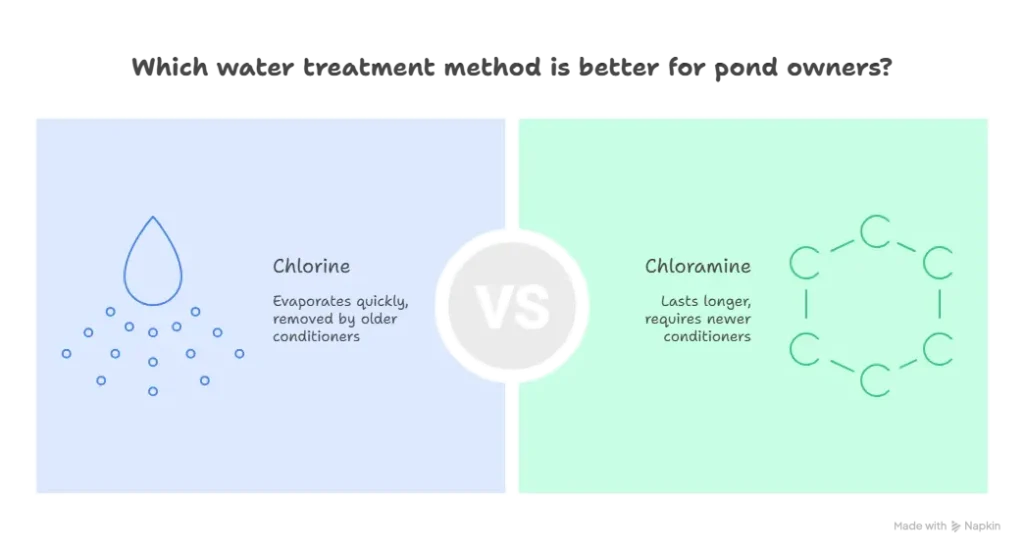
Water companies can use chloramine or chlorine to sanitize tap water. Both of these chemicals should be removed before you add tap water to your pond. In the past, chlorine was used to disinfect tap water; however, recently, a new substance has been developed called chloramine, which is a mixture of both chlorine and ammonia. This mixture lasts longer than chlorine and does not evaporate into the atmosphere. This is good news for water companies because they can efficiently treat tap water, and the tap water will remain disinfected for a longer period of time. Unfortunately, this is bad news for pond owners because they can no longer allow tap water to stand and remove the chemicals. Furthermore, older water conditioners can only remove chlorine. The chloramine would remain in the tap water.
What Is the Solution?
You must make sure that your de-chlorinator treatment neutralizes both chloramine and chlorine. Newer water conditioners remove both of these substances. If you are unsure which chemical is used to disinfect your water, opt for a dual treatment. You can also double-check by contacting your local water treatment company and asking which chemicals are used during the treatment process. Some states and counties continue to use chlorine, while others have begun to use chloramine. The only way you can know for sure is to ask your water treatment company.
Why Is Chlorine Dangerous to Fish and Ponds?
Chlorine and chloramine can be deadly to aquatic life. It can cause stress, burns, or even death.
Chloramine and chlorine are reactive substances that bind and react to organic compounds. A sufficient dose of chlorine is a powerful disinfectant, which is why it is used around the world in tap water to destroy bacteria. The problem with chlorine is that it cannot distinguish between good and bad bacteria and will, therefore, kill off all types of bacteria in your pond and filter box. Beneficial bacteria are essential to your pond’s biological filtration system and will be destroyed by chlorine. This would cause the water quality to decrease and allow waste products to increase.
Chloramine and chlorine are toxic to aquatic life. Even a trace amount of these chemicals can cause stress and damage to your fish. Upon contact, the chlorine will burn and damage the scales, gills, and breathing tissues of koi and goldfish. It can also enter the bloodstream and cause internal burning and significant pain to the fish.
How Do You Measure Chlorine? What Are the Ideal Water Values for Your Pond?
The ideal amount of chloramine and chlorine in a pond should be 0.00 ppm or as close to zero as possible. Chlorine offers no benefit to a pond. It will kill off beneficial bacteria in the pond and stress, injure, or kill your fish; therefore, all traces of chlorine or chloramine should be removed from your pond water. It may be impossible to remove all the chlorine or chloramine; hence, a reasonable goal for a pond with fish is to have around 0.01 PPM in your pond. If your climate is hot and has a lot of natural evaporation, you will need the top off your pond water often, which means you need to be more careful about the chlorine levels in your pond water compared to someone who lives in a colder climate. Original content source: koipros.com – New ponds and those that require frequent water changes can experience high levels of chlorine or chloramine due to the amount of tap water added to the pond.
To measure chlorine levels in a pond, you will need an electronic testing device, or you can test your water for ammonia. If there is a trace amount of ammonia present in your tap water, you very likely have chloramine in your tap water. The alternative is to assume both chloramine and chlorine are present in your tap water and treat your tap water before you add it to your pond. Your tap water will always contain at least one of these chemicals. There are commercial treatments available that remove both substances, which would eliminate the need for testing.
How to Dechlorinate Pond Water
1. Allow water to stand for 24 to 48 hours. This method is recommended for smaller ponds that contain fish and will only work with tap water that contains chlorine.
If you have a small pond and need to add a small amount of water or do a small water change, allow your water to stand in a bucket for at least 24 hours. This method allows the chlorine to reach the water surface and escape into the atmosphere. Because this method requires no further treatments, it is an excellent choice for small ponds with fish that do not have a large volume of water that needs to be topped off.
Unfortunately, this method only disperses chlorine. Chloramine is much heavier and cannot be removed using this method. If you have tested your water and it contains ammonia or you have contacted your water company and ascertained your tap water contains chloramine, you will need a dedicated treatment option like the ones listed below.
2. Water Conditioner and De-Chlorinator Products – These products are recommended for small ponds that contain fish.
Pond Primes Treatment removes chloramine, ammonia, nitrate, and chlorine from your tap water. A second option is a water conditioner that strips chloramine, chlorine, and other heavy substances from your water. Water conditioners are good options for both small and large ponds. The water may be treated multiple times until the desired chlorine levels are reached. Water conditioners are perfect for new ponds consisting of tap water. It can also be used with every water change to neutralize all harmful chemicals before they can harm the ecosystem of the pond.
Although most newer water conditioners neutralize chloramine and chlorine, you should always read the label first to ensure that the water conditioner removes both types of chemicals. Modern water conditioners can be used to treat water before it is added to the pond, or it can be directly added to your pond. This provides you with a flexible choice if you already have water in your pond, and you’re worried that you still have trace amounts of chlorine or chloramine in your pond water.
We recommend either choosing API Pond Prime’s Chlorine and Heavy Metal Neutralizer or Pond Prime’s Chlorine or Chloramine Remover. The API Pond treatment removes heavy metals, including lead and zinc. Conversely, Pond Prime removes excess ammonia and nitrates from your pond water. If you are only concerned about chlorine and chloramine, either treatment works well, and you cannot go wrong.
3. Activated Carbon Charcoal Filtration – This choice is recommended for small and large ponds that contain fish. Activated carbon neutralizes organic pollutants that regular filter media does not remove.
Activated carbon removes heavy organic pollutants that biofiltration and mechanical filtration cannot remove. The carbon works through adsorption. Adsorption causes pollutants to stick together and then adhere to the carbon. The pollutants are neutralized using this method. The activated carbon should be replaced every two to three months as it becomes saturated with pollutants. The contaminants that can be removed using this process include pesticides, medicines, chlorine, chloramines, perfume, and tannins.
Activated carbon enhances clarity as it removes chlorine and chloramine from your pond during a water change. Because activated carbon is cheap, many pond owners choose to keep activated carbon in their filter box to improve water quality and remove all residue pollutants. Activated carbon can be used year-round to improve filtration and has no drawback other than the cost.
You can treat water before it is added to the pond with activated carbon, or you can add carbon to your filter box, and the water will cycle the water through the filter box and neutralize the chlorine. This is especially beneficial for new ponds during their cycling as it will naturally bring down chlorine levels, and it improves bacterial populations allowing you to add fish safely.
You can find out more about activated carbon by reading our article located here.
4. Carbon Filter Hose Attachments – Carbon filter hose attachments are perfect for small and large ponds that contain fish.
Carbon filter hose attachments are convenient for pond owners who regularly do water changes.
An interesting method that can be used to reduce chloramine and chlorine from your tap water is to add a carbon filter to the end of your garden hose. Typically, most refills and water changes are done using a hose; therefore, adding a carbon filter can ensure chlorine and chloramine are removed from the water before it’s added to your pond. These filter attachments have become popular for gardening ponds and drinking water. Unfortunately, they cannot effectively filter tap water for a pond. Most filter cartridges run out within a few hundred gallons. If you have a larger pond, you would be replacing the filter constantly.
Newer models of filter attachments provide a more substantial capacity (up to 5,000 gallons), meaning they are much more suited for larger ponds and frequent water changes. The filter attachment is fitted to the end of your water hose and contains an activated carbon filter chamber. As the water passes through the chamber of the filter, the carbon will neutralize chloramine and chlorine in the same manner that activated carbon does. The benefit of this method offers is that it allows you to instantly add de-chlorinated water to your pond without treating the water beforehand or after it’s added to the pond.
If you are interested in trying a carbon filter attachment, ensure that you choose one that has a larger carbon capacity; otherwise, you will be replacing it frequently. Common carbon filter attachments are intended for only small amounts of water, and you will need something more substantial for your pond. We recommend the Ideal H2O Inline Carbon Filter. The filter lifespan on this carbon filter attachment is 8,000 gallons of water, making it the perfect choice for small and large ponds.
5. De-Chlorination And Water Filtration Systems – This type of system is the preferred method for large, heavily stocked ponds. A dedicated water filtration system removes chlorine and chloramine.
Although this system is not the best choice for all pond owners, those who have a heavily stocked fish pond or those who perform water changes regularly may wish to invest in a dedicated de-chlorinator system. This powerful system is used industrially to remove chlorine, sediment, and chloramine from large volumes of water quickly. The system uses activated carbon, however, on a much larger scale than carbon filter attachments. The carbon in the system is more refined to ensure a higher degree of purity to maximize water filtration. Most systems have a carbon treatment lifetime of approximately 50,000 gallons, which means it would work for many years without needing to be replaced.
This system may be a bit of an overkill for smaller ponds; however, it is a viable option for a larger pond that requires regular water changes such as a pond used by fish breeders or fish sellers. These systems can be connected to a UV clarifier to enhance purification and increase the number of bacteria, tannins, and algae that are removed making your water clear and cleaner.
REACH US 529 W Blueridge Ave #F110 Orange, CA 92865 (714) 613-0123 [email protected]
Conclusion
Keeping your pond free from chlorine and chloramine isn’t just about clean water — it’s about protecting the health of your koi, goldfish, turtles, and plants. Even trace amounts of these chemicals can cause stress, burns, or worse, for your aquatic life. Luckily, with the right methods like dechlorinators, activated carbon, or dedicated filtration systems, you can create a safe and thriving environment for your pond. The key is consistency: always test, treat, and monitor your water. When you do, your pond will reward you with crystal-clear water and healthy, active fish.
Call to Action
Don’t let chlorine ruin your pond’s ecosystem! Start using the right dichlorination method today and keep your fish safe. If you’re in need of expert pond help or an emergency service, call KoiPros at (714) 613-0123 — we’re here to make sure your pond stays healthy and beautiful.
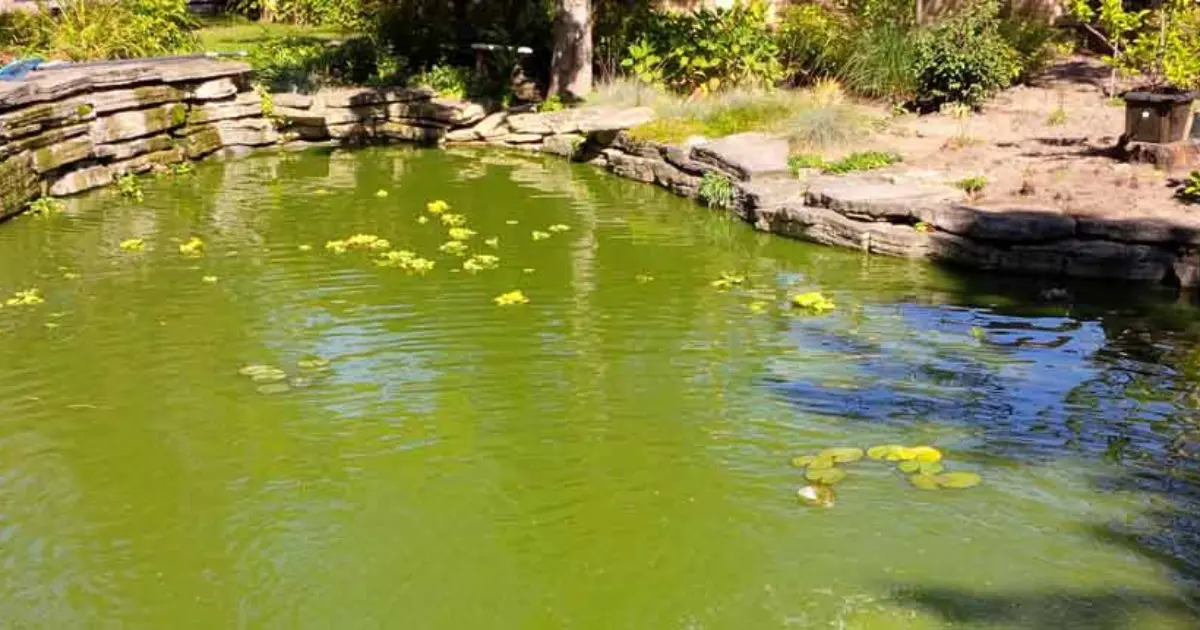
Green water can turn your backyard pond from a serene retreat into a cloudy mess. If you live in Southern California, where warm temperatures and abundant sunlight are common, you?ve likely seen your koi pond or water feature lose its clarity. This murky haze, caused by single-celled algae, hides your fish and disrupts your pond?s beauty. The good news? You can restore clarity with practical, sustainable methods tailored to Southern California?s climate. By the end of this guide, you?ll know how to:
Identify the causes of green water pond solutions in your region.
Apply eco-friendly techniques to clear algae blooms.
Maintain a healthy pond ecosystem for koi and plants.
Use seasonal strategies to prevent green water year-round.
Manage nutrients and filtration for lasting clarity.
Causes of Green Water in Ponds
Single-celled algae cause green water, creating a cloudy haze that obscures your pond. These tiny plants thrive on nutrients, sunlight, and warm water. In Southern California, where sunny days dominate in places like Orange County and Los Angeles, algae blooms are frequent. Nutrients come from fish waste, uneaten food, and organic debris like leaves or grass clippings. For example, a homeowner in Irvine noticed their pond turned green after leaves from a nearby tree fell in during fall.
Overfeeding fish adds excess nutrients. Uneaten food decomposes, releasing nitrogen and phosphates that fuel algae. Poor water circulation, often from clogged filters or weak pumps, lets algae multiply unchecked. In San Diego?s warm climate, water temperatures above 50?F speed up algae growth. Unlike string algae, which forms visible mats on rocks, single-celled algae stay suspended, requiring specific filtration. A Riverside County pond with low circulation saw rapid blooms until the owner upgraded their pump. Understanding these factors is key to effective pond green water treatment.
Sustainable Methods to Combat Green Water
You can clear green water without harsh chemicals. Sustainable methods create a balanced pond ecosystem while addressing algae naturally. Here are key approaches:
Beneficial Bacteria Treatments: These break down nutrients like fish waste and decaying plants. In a Santa Ana pond, bacteria cleared green water in two weeks without harming fish.
Aquatic Plants: Plants like water lilies, anacharis, and water hyacinth absorb nitrogen and phosphates, starving algae. For example, a Los Angeles homeowner reduced algae by adding water lettuce. Aim for one bunch of oxygenating plants (e.g., hornwort) per two square feet of pond surface, tied to rocks or in containers.
Shade Structures: Pergolas or floating plants like lotus cut sunlight, a major algae trigger. An Irvine pond stayed clear after adding a trellis with climbing vines.
Plant Filters: A small channel lined with pea gravel and plants like watercress filters water slowly. Gravel traps debris, and plants absorb nutrients, supporting eco-friendly pond water solutions.
These natural solutions for green water are safe for koi and environmentally friendly. In Southern California?s sunny climate, combining plants and shade is especially effective. For instance, a pond in Anaheim saw reduced algae after installing a plant filter with water hyacinth. These chemical-free green water solutions keep your pond vibrant and healthy. Learn more about sustainable pond care to maintain a thriving ecosystem. Visual: Aquatic plant diagram
Filtration Systems and UV Clarifiers
Filtration systems are vital for pond filtration for green water. Here?s how they work:
Mechanical Filtration: Removes debris like leaves or twigs. Skimmer nets and pond vacuums, used in San Bernardino County, keep ponds clean. An Anaheim homeowner cleared debris weekly to prevent algae spikes.
Biological Filtration: Uses beneficial bacteria to break down organic matter. Bacteria live on filter media like lava rock or plastic wheels. A clogged filter in a Riverside pond caused green water until cleaned and upgraded.
UV Clarifiers: Expose single-celled algae to ultraviolet light, stopping reproduction. Dead algae clump, making them easy to filter. A San Diego koi pond regained clarity in days with a UV clarifier.
Water flows into the clarifier, passes the UV bulb, and exits through a mechanical or biological filter, ensuring clear pond water techniques. Combining these systems is ideal for koi pond green water management, especially for large water features in hotels or municipal parks. For example, a Los Angeles hotel pond stayed clear after installing a custom filtration system with a UV clarifier. Koi Health and Pond Ecosystem Balance
A balanced pond ecosystem keeps koi healthy and water clear. Here are key practices:
Proper Feeding: Feed high-quality koi food, offering only what fish eat in three to five minutes, once daily in spring, summer, and fall (above 50?F). Overfeeding in Orange County?s warm climate fuels algae. An Irvine homeowner saw clearer water after adjusting feeding.
Water Testing: Use kits like TetraPond to check pH, phosphates, and nitrogen monthly. Low pH or high phosphates stress koi, causing health issues. Regular testing prevents imbalances.
Mosquito Control: Clear water and aeration reduce mosquito breeding, a concern in Los Angeles. Fountain pumps boost oxygen, supporting koi and deterring pests.
These healthy pond water tips ensure fish health management. For instance, a Santa Ana pond owner reduced algae and mosquito larvae by testing water and adding an aerator, creating a thriving environment for koi.
Seasonal Pond Maintenance Strategies
Southern California?s climate requires tailored seasonal pond water care to maintain backyard pond water clarity. Here?s a seasonal breakdown:
Spring: Test water quality. Add oxygenating plants like anacharis. A Santa Ana homeowner added hornwort in March, cutting summer algae risks.
Summer: Monitor aeration in Irvine?s heat. Clean filters monthly and skim debris weekly to prevent nutrient spikes.
Fall: Skim leaves in San Diego?s windy season. Clean filters to prepare for winter.
Winter: Feed minimally, as koi metabolism slows below 50?F. Remove debris to avoid nutrient buildup.
Aeration systems, like submersible pumps or fountains, improve circulation, preventing algae blooms. A Riverside County HOA reduced green water with an aerator. Regular pond cleaning for green water, like backwashing filters, keeps systems efficient.
Season
Tasks
Benefits
Spring
Test water, add plants
Reduces nutrients, prevents algae
Summer
Monitor aeration, clean filters
Prevents stagnation, maintains clarity
Fall
Skim leaves, clean filters
Prepares pond for winter, cuts nutrients
Winter
Minimal feeding, remove debris
Avoids nutrient spikes, protects koi
This table summarizes key tasks for year-round clarity, ideal for homeowners or HOAs managing ponds in Southern California.
Managing Nutrients and Algae Blooms
Nutrient control is key to controlling pond algae blooms. The nitrogen cycle converts fish waste (ammonia) into nitrites and nitrates, which algae use as food. Here?s how to manage nutrients:
Monitor Feeding: Avoid overfeeding to limit ammonia. Feed only what koi eat in three minutes.
Test Water: Check phosphates and nitrates monthly. High levels fuel algae.
Control Debris: Skim leaves and avoid phosphate-rich gravel (e.g., yellow or white varieties). In San Bernardino County, mulch runoff triggered blooms until rock barriers were added.
Shoreline Restoration: Use native plants or rock armoring to reduce erosion. An Orange County park stabilized its pond edges with grasses, cutting algae growth.
These nutrient management strategies support pond water quality maintenance. For example, a Los Angeles pond owner reduced blooms by skimming debris and testing water regularly, ensuring a healthy ecosystem.
Why Pick Koi Pros Pond Services? Your Trusted Partner
With over 40 years of experience, Koi Pros delivers clear, healthy ponds across Southern California. Our licensed technicians use advanced filtration and sustainable algae control, tailored to the region?s climate. Aurore Annick in Irvine transformed her murky pond into a vibrant koi habitat with our plant filtration and UV clarifier systems. Serving HOAs, hotels, and parks in Orange County and Los Angeles, we offer personalized Orange County pond maintenance and Southern California koi pond care. Our proven expertise in professional pond cleaning services ensures lasting results you can trust.
Frequently Asked Questions About Green Water
What causes green water in my pond?
Single-celled algae grow due to nutrients, sunlight, and warm temperatures. Filtration and nutrient control prevent blooms.
How can I prevent algae blooms in Southern California?
Use plants, UV clarifiers, and aeration. Monthly testing ensures clearing green pond water.
Are UV clarifiers safe for koi?
Yes, they target algae without harming fish when installed correctly.
How often should I test my pond water?
Test monthly for pH, phosphates, and nitrogen to maintain balance.
Can plants alone clear green water?
Plants help but work best with filtration and bacteria treatments.
What maintenance prevents green water?
Regular filter cleaning, aeration, and plant management keep water clear.
What are sustainable algae control options?
Beneficial bacteria, plants, and shade structures offer eco-friendly solutions.
How do I prevent mosquito breeding in my pond?
Aeration and clear water reduce mosquito larvae in Los Angeles or Irvine ponds.
Conclusion
Green water doesn?t have to ruin your pond?s beauty. Sustainable methods like beneficial bacteria and aquatic plants reduce algae naturally. Advanced filtration, including UV clarifiers, ensures clarity. Proper koi care, seasonal maintenance, and nutrient control create a thriving ecosystem. In Southern California?s sunny climate, these steps are essential. Aurore Annick in Irvine restored her cloudy pond with plant filtration and aeration, creating a stunning feature. With 40 years of experience, Koi Pros helps homeowners, HOAs, and hotels in Orange County and Los Angeles maintain vibrant ponds. Contact Koi Pros at (714) 500-7381 to restore your pond today.
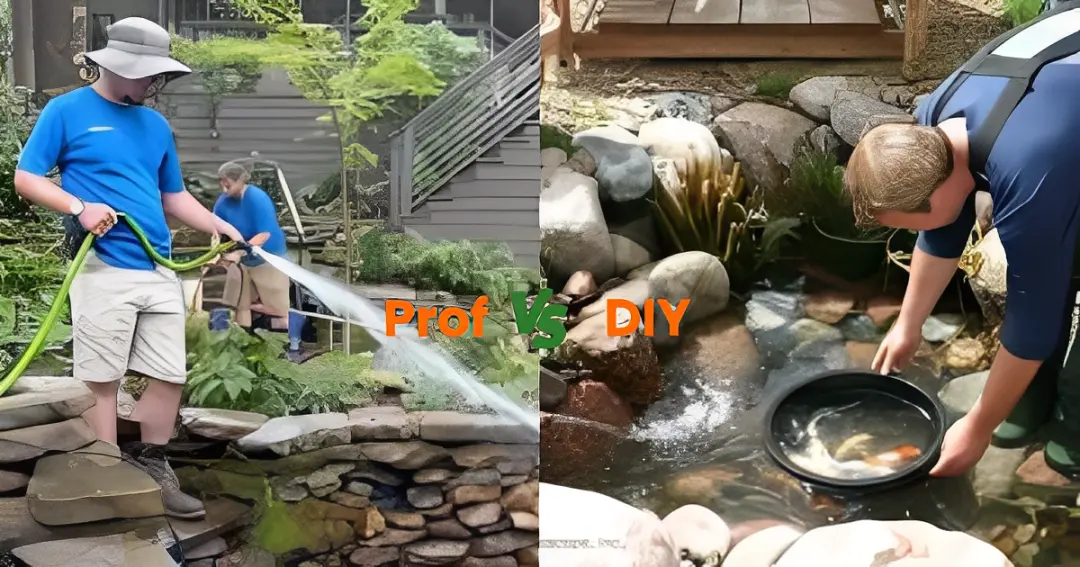
Backyard ponds create a peaceful retreat in any outdoor space. Their gentle water sounds and colorful fish add beauty to homes across Southern California. Yet, the regions warm, dry climate brings unique challenges. High temperatures speed up algae growth. Low rainfall affects water levels. Owners often face a choice: clean the pond themselves or hire experts. Each path has distinct benefits and drawbacks. This guide examines both options in detail, covering methods, costs, and key factors like fish safety and local conditions. By exploring these, you can decide what works best for your ponds needs.
Heres what this guide will help you understand:
Benefits and challenges of cleaning your pond yourself versus hiring professionals.
How Southern Californias climate affects pond care.
Costs, time, and risks involved in both approaches.
Practical tips for maintaining koi health and eco-friendly practices.
Seasonal strategies to keep your pond vibrant year-round.
Why Pond Cleaning Matters in Southern California
Ponds need regular care to stay healthy and attractive. Without it, debris builds up, water turns cloudy, and fish suffer. In Southern California, the climate makes this even more critical. High temperatures, often exceeding 80F, boost algae growth. Droughts and water restrictions limit refilling options. Over 60% of Orange County ponds face algae issues due to heat.
Cleaning removes leaves, sludge, and excess nutrients that harm water quality. It also supports beneficial bacteria treatments that break down waste naturally. A clean pond enhances curb appeal for affluent homeowners and HOAs. It prevents mosquito breeding, a concern in humid areas like San Diego. Regular maintenance extends the life of pond equipment maintenance items like pumps and filters, saving money over time.
For example, a neglected koi pond in Irvine developed green water and fish stress within months. Routine cleaning could have prevented this. By addressing these issues early, you maintain a balanced pond ecosystem balance and avoid costly repairs.
DIY Pond Cleaning: Benefits and Challenges
DIY pond maintenance appeals to hands-on owners with smaller ponds. It offers control and savings but comes with hurdles. Understanding both helps you weigh your options.
Benefits of DIY Cleaning
Cleaning your pond yourself can save money. BasicDIY pond toolslikeskimmer netsand brushes cost $20 to $50 upfront. You learn about your ponds needs, such as spotting cloudy water early. You also clean on your own schedule. For a smallgarden pond maintenancesetup, this flexibility is ideal. For instance, a homeowner in Anaheim can skim leaves weekly to keep water clear without professional help.
Challenges of DIY Cleaning
Cleaning takes time and effort. A medium-sized pond requires 4 to 6 hours for a full clean.Tasks like scrubbing rocks or draining water are physically demanding. Without experience, you might harm the ecosystem. Overusing chemicals can disruptpH balance adjustmentor kill fish.In Southern California, water restrictions complicate draining. You may need to collect rainwater to comply with local rules.
Practical DIY Tips
To clean effectively, follow these steps:
Debris skimming: Use a net to remove leaves and twigs daily.
Checkfilter cleaning: Rinse filters monthly to prevent clogs.
Partial drain: Remove 30 to 50% of water to clean surfaces without stressing fish.
Refill with treated water: Add dechlorinator to protect aquatic life.
Forpond algae removal options, try natural methods like barley straw to reduce growth safely. These steps work for small setups but may overwhelm owners of larger ponds in areas like Riverside County.
Professional Pond Cleaning: Expertise and Efficiency
Hiring experts for professional pond services ensures thorough care with minimal effort. Specialists bring tools and knowledge to maintain complex systems.
Advantages of Professional Cleaning
Experts diagnose issues like hidden leaks or poorpond water management They useprofessional pond cleaning equipmentlike high-poweredpond vacuumsforsludge removal. A cleaning session takes 1 to 2 hours, compared to a full day for DIY.In Southern California, professionals adjust for heat-driven algae and water restrictions. They also offerpond restoration servicesto revive neglected features.
For example, a hotel in San Diego had a murky pond restored to clarity in one visit, improving guest impressions. Professional pond cleaning benefits include long-term health and reduced maintenance stress.
Drawbacks of Professional Cleaning
Costs range from $200 to $500 per session. Scheduling can be tricky during busy seasons like spring. However, the expertise often outweighs these concerns for complex ponds or busy property managers.
Professional Methods
Hiring pond cleanersstarts with water testing for pH and ammonia They remove debris, clean filters, and treat water with safe products. In Los Angeles, experts might add aeration systems to combat heat stress. These methods ensureclear water restorationand protect equipment.
Explore professional pond care options to simplify maintenance for your Southern California pond.
Koi-Specific Care: Protecting Your Fish and Plants
Koi pond cleaning requires extra caution due to fish sensitivity. Stable conditions are vital for fish health management.
Water Quality for Koi
Keep pH between 7.0 and 7.5 usingwater testing kits. Test for ammonia and nitrites monthly. Overfeeding adds waste, so feed koi small amounts daily. In Orange, a homeowner learned this after fish became lethargic from excess food.
Cleaning Tips for Koi Ponds
Skim debris gently to avoid stirring sediment.If draining, move koi to a temporary aerated tank. Scrub surfaces lightly to preserve bacteria. Foraquatic plant care, trim dead leaves in fall to prevent decay. Choose drought-tolerant plants for Southern California to save water.
Professional Koi Care
Experts ensure precise water treatments andUV clarifier maintenanceto control algae.They check for diseases and adjust feeding schedules. This is ideal for affluent homeowners with large koi ponds in Irvine or Santa Ana.
Eco-Friendly Pond Cleaning Solutions
Eco-friendly pond cleaning solutions prioritize sustainability. They protect wildlife and align with Californias environmental regulations.
Natural Cleaning Methods
Beneficial bacteria treatmentsbreak down organic waste, reducing odors and muck.Enzyme products work safely for fish. Forpond debris removal methods, use rakes with filter pads to collect leaves. Barley straw pellets limit algae naturally.
Professional Eco-Friendly Practices
Experts use non-toxic treatments and energy-efficientpump maintenance.In San Bernardino County, professionals might install solar-powered aerators. These methods supportsustainable pond careand comply with water restrictions.
For example, a municipal park in Riverside used bacteria-based cleaning to restore a pond without chemicals, benefiting local wildlife. These solutions reduce environmental impact while maintaining clarity.
Tools like nets andpond vacuumscost $50 to $150 once. Supplies forpond cleaning techniquesrun $20 to $50 per session. Annual costs total $100 to $300. Cleaning takes 4 to 8 hours per session.
Professional Costs and Time
Sessions cost $200 to $500, with yearly plans at $1,000 to $2,000.Professionals finish in 1 to 2 hours, minimizing disruption. They prevent issues like pump failures, which can cost $500 or more to fix.
Comparison Table
Aspect
DIY
Professional
Initial Cost
$50-150 tools
$200-500 per session
Annual Cost
$100-300
$1,000-2,000
Time per Cleaning
4-8 hours
1-2 hours
Long-Term Savings
Risk of repairs
Preventive care
This table shows DIYs lower upfront cost versus professional efficiency.
Risks and Safety Considerations
Pond health and safety protect owners, fish, and the environment. Mishandling can lead to problems.
DIY Risks
Using too many chemicals can cause skin irritation or harm fish. Slippery surfaces risk falls. Toxic algae blooms may pose health hazards if touched.Inbackyard pond upkeep, secure edges to keep kids and pets safe.
Professional Safety
Experts use proper gear like gloves and boots. They managemosquito preventionby clearing stagnant areas, critical in humid Orange County.Odor controlprevents complaints from neighbors or HOA members.
For example, a poorly cleaned pond in Santa Ana led to mosquito issues, resolved by professional intervention. Regular pond inspection reduces these risks.
Seasonal Pond Cleaning Strategies in Southern California
Seasonal pond cleaning choices adapt to local weather. Southern Californias mild winters and hot summers shape care routines.
Spring and Summer
Remove debris after winter storms. Check filters and test water weekly to combat heat-driven algae. Monitor evaporation and use rainwater when possible.
Fall and Winter
Net leaves to prevent decay. Inspect pumps for winter readiness. Mild winters allow lighter maintenance, but stay vigilant for debris.
A homeowner in San Diego used leaf nets in fall, reducing cleaning time significantly. Professionals can handle deeper seasonal tasks like pond filtration care.
Advanced Filtration and Equipment Maintenance
Pond filtration care ensures clear water and healthy ecosystems. Filters trap particles and foster bacteria.
DIY Equipment Maintenance
Clean filters monthly to avoid clogs. Checkpump maintenancefor wear annually. ReplaceUV clarifier maintenancebulbs yearly to control algae.
Professional Equipment Care
Experts backwash pressurized systems carefully to preserve bacteria. They install energy-efficient pumps, ideal for Southern Californias utility costs. A diagram of a filtration system can clarify components for owners.
For instance, a property manager in Anaheim upgraded to a solar-powered pump, cutting costs. Professionals ensure equipment longevity.
Why Choose Koi Pros for Pond Cleaning? We Put Your Needs First
With over 40 years of experience, Koi Pros delivers tailored pond care across Southern California. Our licensed technicians use advanced filtration technology and eco-friendly methods to keep ponds vibrant. Clients like Jane D. in Irvine praise our ability to restore murky water to clarity in one visit. We serve HOAs, hotels, and homeowners from Orange County to San Diego, offering customized plans that fit your schedule and budget. Our proven expertise ensures fish safety and long-term pond health, making us a trusted partner for your landscaping pond care needs.
Maintenance Checklist and FAQs
Maintenance Checklist
Keep your water feature cleaning on track with this checklist:
Weekly: Skim debris, check clarity.
Monthly: Test pH, clean filters.
Seasonally: Deep clean, add bacteria
FAQs
How often should a koi pond be cleaned? Every 3 to 4 months for deep cleaning, with weekly skimming.
What are signs of poor pond health? Cloudy water, lethargic fish, or foul odors.
Can DIY cleaning harm koi? Yes, if chemicals are misused or water changes are too sudden.
How do experts ensure eco-friendly cleaning? They use natural bacteria and non-toxic treatments.
Client Testimonial
Koi Pros restored our murky Irvine pond to crystal clear in one visit. Their expertise saved us time and worry. Jane D., Homeowner.
Summary
DIY pond cleaning vs professional offers two paths for pond care comparison. DIY saves money but takes time and risks errors. Professionals provide efficiency and expertise, ideal for complex setups. Pond cleaning options include manual skimming or advanced vacuuming. Hiring pond cleaners ensures thorough pond cleaning techniques. Pond water management balances chemistry. Pond algae removal options range from barley straw to professional treatments. Pond debris removal methods use nets or vacuums. Pond restoration services revive neglected features.
For koi pond cleaning tips, focus on gentle cleaning and water testing. Pond maintenance Southern California demands climate-aware strategies. Professional pond cleaning benefits include time savings and fish safety.
Contact Koi Pros at (714) 500-7381 to schedule a consultation and keep your pond healthy year-round.
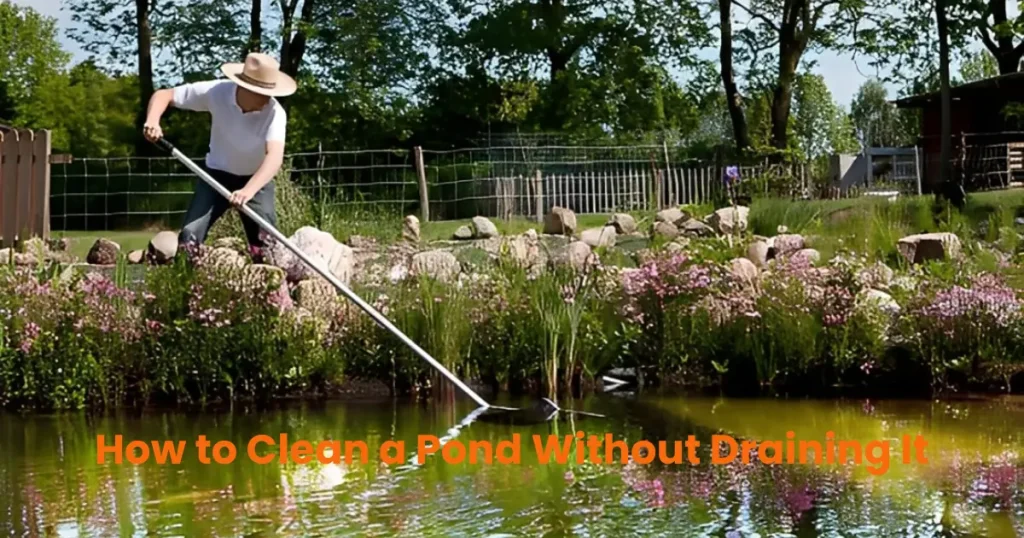
Pond cleaning doesn?t always require a full drain to maintain a healthy aquatic environment. In fact, draining your pond can be harmful, causing stress to your fish and disrupting the delicate ecosystem. Fortunately, there are effective, sustainable ways to clean your pond without draining it, ensuring the health and vitality of your pond while keeping the water and its inhabitants safe.
Whether you are dealing with unwanted algae, murky water, or debris accumulation, this guide will walk you through the necessary actions to keep your pond sparkling clean and healthy year-round. By following these methods, you?ll maintain clear water, reduce harmful waste, and improve the overall condition of your pond.
Here?s what this guide will help you understand:
The importance of eco-friendly pond cleaning methods for maintaining fish health and water clarity.
The steps you can take to clean your pond without draining it, including tools and techniques.
How to maintain the natural balance of your pond ecosystem while cleaning it.
Sustainable solutions for preventing algae growth and improving water quality.
The role of seasonal maintenance to keep your pond healthy year-round.
Why Pond Cleaning Without Draining Is Crucial for Your Ecosystem
Cleaning your pond is essential for preserving the balance of the aquatic ecosystem, maintaining water clarity, and ensuring the health of your fish and plants. Draining a pond may seem like the most effective way to clean it, but it can harm your fish and upset the natural balance within the pond.
In Southern California, where many homeowners rely on ponds as ornamental water features or for koi farming, draining a pond can cause significant issues. According to recent studies by the Southern California Water Quality Association, poor water management in ponds can lead to nutrient imbalance, increasing the risk of algae blooms and poor water clarity. Draining the pond removes critical water and plant life that play an essential role in maintaining a balanced pond ecosystem.
When a pond is drained, the removal of water also removes essential nutrients, beneficial bacteria, and aquatic plants that contribute to the pond?s ecosystem. Draining a pond forces fish into a small, stressful space, which can lead to health problems. Instead, cleaning your pond without draining it is a more sustainable and effective solution for long-term pond health.
Step 1: Removing Floating Debris and Waste
The first and simplest task in pond cleaning is removing the debris floating on the surface. Organic matter such as leaves, twigs, and dead insects can accumulate quickly and degrade the water quality. While some debris is unavoidable, regular removal can prevent larger issues down the road, like algae blooms or a decrease in oxygen levels.
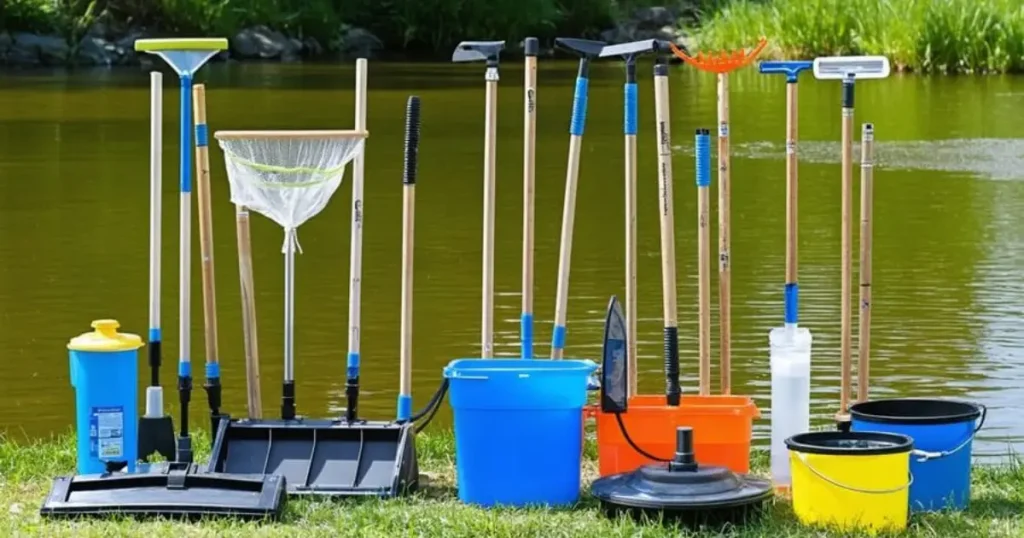
Tools You Will Need:
Pond Skimmer: This tool is crucial for removing floating debris before it can sink and cause problems. A pond skimmer pulls debris to the surface and deposits it in a collection basket for easy disposal.
Manual Pond Net: A pond net is ideal for scooping out larger debris that the skimmer might miss, or for cleaning corners and edges of the pond.
How It Benefits Your Pond:
Prevents the buildup of organic waste, which can lead to algae growth and poor water quality.
Helps keep the pond water clear and improves overall aesthetic appeal.
Reduces the chance of introducing bacteria or harmful organisms that thrive in decomposing organic matter.
Step 2: Cleaning the Pond Floor to Eliminate Sludge and Sediment
Sludge and sediment often settle at the bottom of the pond, where it?s harder to remove. Over time, this layer of waste material can create an unhealthy environment by introducing excess nutrients that feed algae, contributing to poor water quality and fish stress.
In Southern California, ponds located in areas like Orange County are especially prone to debris buildup due to the region?s dry climate and seasonal rains. The accumulation of organic material from overhanging trees, windblown dust, and plant matter can add to the sludge layer at the bottom of your pond, further complicating the cleaning process. Regular cleaning of the pond floor can help maintain a healthy pond that supports both koi and aquatic plants.
Essential Tools:
Pond Vacuum: The pond vacuum is a powerful tool that allows you to remove sludge from the pond floor without disturbing the water or stressing out the fish. It works similarly to a vacuum cleaner but is designed for aquatic environments.
Manual Netting: For larger debris that might settle on the pond floor, use a manual net to scoop it out.
How It Benefits Your Pond:
Prevents the accumulation of harmful waste, which can deplete oxygen levels in the water.
Keeps your pond clean, ensuring that the fish and plants are thriving in a healthy environment.
Reduces the risk of algae blooms that are typically fueled by organic material decomposing at the bottom of the pond.
Step 3: Introduce Eco-Friendly Pond Treatments for Healthy Water
After removing physical debris, it?s essential to improve the biological health of your pond. Pond treatments can help control algae, maintain water balance, and reduce harmful waste. Using eco-friendly pond treatments ensures that you?re not harming your fish or plants while achieving a healthier pond.
What You Need:
Beneficial Bacteria: These bacteria break down harmful organic waste in the water, including ammonia and nitrates. They help maintain water quality and reduce the need for chemical treatments.
Algae Control Treatments: Use safe, natural algae control products like barley straw, which works by inhibiting algae growth in a sustainable way.
Why It Matters:
Supports long-term pond health by encouraging the growth of beneficial bacteria that purify the water.
Prevents algae blooms and reduces the need for harsh chemical treatments that can harm the aquatic environment.
Keeps water clear and helps maintain the overall health of your pond?s ecosystem.
Step 4: Use UV Clarifiers to Keep Water Clear and Healthy
A UV clarifier is an excellent tool for keeping your pond water clear and preventing algae growth. The UV light breaks down algae at a cellular level, preventing it from proliferating and turning your pond water green.
In regions like Los Angeles and Orange County, where algae blooms are particularly common due to warm temperatures, installing a UV clarifier is a wise investment. The presence of direct sunlight and high temperatures creates the perfect environment for algae growth, making it a major concern for local pond owners. By using a UV clarifier, you can keep your pond?s water free from algae and maintain optimal conditions for your koi.
What You Need:
UV Clarifier: This device is typically installed in the pond?s filtration system and uses ultraviolet light to treat the water continuously.
Regular Cleaning: Ensure the UV clarifier is cleaned regularly to keep it functioning effectively.
Why It?s Important:
Prevents the growth of algae by targeting and neutralizing it before it can cloud the water.
Helps to maintain clear, visually appealing water throughout the year.
Supports healthy oxygen levels by ensuring that algae doesn?t decompose and deplete the oxygen supply.
Step 5: Keep Your Filtration System in Top Shape for Maximum Efficiency
A proper filtration system is the key to maintaining a healthy pond environment. Filters help remove debris, waste, and excess nutrients from the water, ensuring that your pond stays clean and the ecosystem remains balanced.
Tools You?ll Need:
Mechanical Filtration: Removes large debris like leaves, twigs, and other solids from the water.
Biological Filtration: Encourages the growth of beneficial bacteria that break down organic waste and maintain balance in the pond?s ecosystem.
Chemical Filtration: Helps eliminate harmful substances that might dissolve in the water.
Benefits for Your Pond:
Keeps the water clean and clear by removing waste products and maintaining water quality.
Prevents clogging in the system, which can hinder its performance.
Reduces the need for manual cleaning by ensuring the filtration system runs effectively year-round.
Step 6: Seasonal Care and Maintenance for Long-Term Health
Seasonal changes in temperature, fish behavior, and plant growth can all affect the health of your pond. Regular, seasonal maintenance ensures that your pond is prepared for each phase of the year, keeping it healthy no matter the season.
For pond owners in Southern California, where the seasons can vary significantly, seasonal maintenance is key. During the warmer months, ponds can suffer from algae blooms and lower oxygen levels, while in winter, your fish need a different kind of care. By adapting your maintenance schedule to the changing seasons, you ensure that your pond remains a healthy, thriving ecosystem year-round.
What You Need:
Aeration Systems: During the summer months, an aeration system is essential for increasing oxygen levels in the pond.
Water Testing Kits: Regularly test the water for pH, ammonia, nitrates, and other parameters to ensure the water is safe and healthy.
Winter Prep: During colder months, reduce feeding and keep the pond clean to prevent debris accumulation as your koi rest.
Why It?s Crucial:
Seasonal maintenance ensures that your pond adapts to temperature changes and maintains optimal water quality year-round.
Prevents algae growth and oxygen depletion during hot months.
Helps keep your pond clean and clear, regardless of the season.
Frequently Asked Questions (FAQs)
How often should I clean my pond without draining it?
Regular maintenance is key to keeping your pond clean and healthy. For most ponds, cleaning should be done at least once a year, but routine tasks like debris removal and water testing should be done every few weeks. In Southern California, where algae blooms can occur frequently due to warm temperatures, you may need to clean more often in the summer months. By following the steps outlined in this guide, you can keep your pond in top condition without draining it.
Is it safe to clean a koi pond without draining it?
Yes, cleaning a koi pond without draining it is not only safe but also beneficial for the health of your koi and the overall pond ecosystem. Draining a pond can cause stress to the fish and disrupt the ecosystem. By using methods like pond vacuums, skimmers, and eco-friendly treatments, you can remove debris and improve water quality while maintaining the balance needed for a thriving koi pond.
How do I ensure that the cleaning methods are safe for my fish?
To ensure that your cleaning methods are safe for your fish:
Use non-toxic pond treatments like beneficial bacteria and natural algae control solutions.
Avoid disturbing the pond floor too aggressively, which could stress the koi.
Regularly test water quality to ensure pH, ammonia, and nitrite levels are within safe ranges for your fish.
Always clean the pond gently, especially when using equipment like pond vacuums, to avoid disturbing your koi unnecessarily.
Can I clean a pond without a UV clarifier?
While a UV clarifier helps to maintain clear water by neutralizing floating algae, it is not strictly necessary for cleaning a pond. However, without a UV clarifier, you may experience more frequent algae blooms, especially in warmer months, common in Southern California. If you?re serious about keeping your pond water clear and free from algae, installing a UV clarifier is an excellent investment. It helps prevent green water and ensures your pond remains visually appealing.
How do I control algae growth in my pond without draining it?
Controlling algae growth without draining the pond involves several strategies:
Remove organic debris regularly, as it provides nutrients for algae growth.
Use eco-friendly algae control products like barley straw, which naturally inhibits algae growth.
Introduce algae-eating fish like grass carp, which help keep algae under control by eating it.
Improve pond aeration: Aeration systems like fountains or waterfalls increase oxygen levels, which help prevent algae blooms.
Regularly test and maintain water quality to ensure a balanced pond environment.
How do I know if my pond filtration system needs maintenance?
Your pond filtration system is crucial for maintaining clear and healthy water. Here are some signs that it may need maintenance:
Water flow is reduced: If the water is not circulating properly, the filter may be clogged or damaged.
Visible debris: If debris is visible in the water or accumulating on the pond floor, the filter may not be working effectively.
Water quality issues: If you notice cloudy water, algae blooms, or an unpleasant smell, it?s time to check the filtration system. To maintain proper filtration, clean the filter regularly, check for damage, and ensure that the filter is appropriately sized for the volume of water in your pond.
Should I feed my fish before cleaning the pond?
It?s best to avoid feeding your fish for a few hours before cleaning the pond. This gives the fish a chance to clear their digestive systems and prevents uneaten food from contaminating the water during the cleaning process. Once the pond is clean and the water is restored to a healthy condition, you can resume feeding your koi.
Is pond cleaning different for koi ponds compared to other types of ponds?
Yes, koi ponds require special care during cleaning due to the presence of fish. Koi are sensitive to changes in water quality, so it?s crucial to use gentle cleaning methods that minimize stress. Some additional considerations for koi ponds include:
Avoid using harsh chemicals that could harm the fish.
Maintain proper oxygen levels to prevent stressing the koi.
Be mindful of fish health during cleaning, especially when using pond vacuums and other tools that may disturb the water.
How do I clean a pond in the winter?
Winter cleaning requires a gentler approach since your fish are likely in a more dormant state. In Southern California, winters are typically mild, so most ponds don’t need drastic action. However, you should:
Remove surface debris regularly to prevent buildup.
Test the water quality and adjust as needed.
Avoid disturbing the pond too much, especially if your koi are hibernating.
If there is significant debris on the pond floor, use a pond vacuum carefully to avoid stressing the fish.
Can I clean a pond myself, or should I hire a professional?
You can certainly clean your pond yourself, especially if it?s a manageable size. However, if your pond is large or heavily contaminated, or if you?re dealing with koi ponds where fish health is a primary concern, hiring a professional can help. Professionals like Koi Pros bring over 40 years of expertise in pond cleaning, offering eco-friendly solutions, effective treatments, and customized care for your specific pond needs.
Your Pond, Perfected with Koi Pros ? Discover Why We?re Your Best Choice
Proven expertise: Over 40 years of experience in koi pond care and pond maintenance.
Personalized care: Tailored pond maintenance plans that suit your needs and protect your pond’s ecosystem.
Eco-friendly solutions: We prioritize sustainable methods to ensure a healthy pond for both fish and the environment.
Trusted by homeowners, property managers, and commercial clients throughout Southern California.
Conclusion: Keep Your Pond Healthy with Expert Care
Cleaning your pond without draining it is a sustainable and effective way to maintain the health of your pond?s ecosystem. By following the steps outlined in this guide, you can keep your pond clear, healthy, and vibrant without the stress and disruption of draining. Regular maintenance, eco-friendly solutions, and expert care ensure that your pond will thrive year-round, benefiting both your aquatic life and the environment.
Book a Consultation with Koi Pros to ensure your pond stays clean, healthy, and beautiful for years to come!
Maintaining a clear, healthy koi pond in Southern California?s warm climate can feel like a constant battle against algae, debris, and murky water. Homeowners in Orange County and property managers in San Diego often face unique challenges due to year-round sunshine and seasonal winds. Choosing the right tools makes all the difference in keeping your pond vibrant and your koi thriving. This guide covers essential pond cleaning equipment, including nets, vacuums, and filters, tailored to Southern California?s conditions. By the end, you?ll know how to select tools that ensure a balanced ecosystem and stunning water feature.
Here?s what this guide will help you understand:
How Southern California?s climate impacts pond maintenance needs.
The best nets for removing debris without harming koi.
Effective vacuums for tackling sludge in backyard and commercial ponds.
Advanced filtration systems to keep water clear and algae-free.
Additional tools to support a healthy pond ecosystem.
Pond Maintenance Challenges in Southern California
Southern California?s warm, sunny climate creates unique demands for pond maintenance. With average temperatures above 75?F for most of the year, algae grows rapidly, and debris from eucalyptus or palm trees collects quickly. A 2023 study from the University of California, Riverside, found that warm climates increase organic buildup by 30% compared to cooler regions. This affects water clarity and koi health, especially in areas like Los Angeles or Irvine. Fish-safe pond cleaning tools prevent harm to valuable koi, while eco-friendly pond cleaning tools reduce environmental impact, aligning with sustainable landscaping trends in Orange County.
Regular cleaning keeps ponds clear and supports aquatic life. For instance, a homeowner in Santa Ana struggled with cloudy water until adopting a consistent maintenance routine with targeted tools. Whether you manage a small garden pond or a large water feature for an HOA in San Diego, the right tools for pond maintenance save time and prevent costly repairs. Let?s dive into the essential tools, starting with nets.
Surface Debris Solutions: Pond Nets
Pond nets are critical for removing surface debris like leaves, twigs, and pollen, which are common in Southern California?s windy months. These tools prevent organic matter from sinking and decomposing, which can cloud water and harm koi. Here?s a look at the most effective pond nets for keeping your pond clean:
Skimmer Nets for Daily Cleaning
Skimmer nets scoop lightweight debris like leaves or dust from the water?s surface. Their fine mesh captures small particles without disturbing koi. In Orange County, where tree litter is constant, a skimmer net is a must. Choose a net with a soft, knotless mesh to ensure koi safety. Brands like Tetra offer durable, fish-friendly options ideal for small ponds in Anaheim.
Heavy-Duty Debris Nets
For larger debris like branches or clumped algae, debris nets provide sturdy frames and deeper bags. These are perfect for seasonal cleanups after Santa Ana winds sweep through Riverside County. A long-pole debris net extends reach for larger ponds at hotels or municipal parks. Look for corrosion-resistant materials to withstand Southern California?s salty air.
Koi-Safe Net Options
Fish-safe cleaning tools are essential for koi ponds. These nets use soft, knotless mesh to handle koi during cleaning or relocation without causing stress or injury. For example, a client in Irvine used a koi-safe net to safely move fish during a deep clean, preserving their health. Brands like Laguna prioritize durability and koi protection, making them a top choice.
When selecting a net, match it to your pond?s size and debris type. Store nets in a shaded, dry area to protect them from UV damage. Regular use of pond skimmer tools reduces strain on filtration systems, keeping your pond clear and healthy.
Deep Cleaning with Pond Vacuums
Sludge from fish waste, leaves, and algae settles on pond bottoms, especially in Southern California?s warm climate. Pond vacuums remove this buildup, ensuring clear water and a healthy environment for koi. Here?s a detailed look at vacuum options and their uses:
Handheld Vacuums for Small Ponds
Handheld pond vacuums are compact and easy to use, making them ideal for small backyard ponds in Orange or Santa Ana. They offer strong suction for light sludge and navigate around plants or rocks. A homeowner in Anaheim used a handheld vacuum to clear debris after a storm, restoring water clarity in hours. Choose models with adjustable suction to avoid disturbing koi.
Heavy-Duty Vacuums for Large Ponds
For larger ponds or commercial properties like HOAs in San Bernardino County, heavy-duty pond vacuums handle thick sludge and debris. These models feature high-capacity canisters and long hoses for extended reach. A hotel in San Diego used a heavy-duty vacuum to maintain a large water feature, impressing guests with its clarity. Look for models with multiple nozzles for versatility.
Energy-Efficient Vacuum Options
Eco-friendly pond vacuums use low-wattage motors to reduce energy consumption, aligning with Southern California?s sustainability goals. These vacuums clean effectively while minimizing environmental impact. For instance, a Riverside County client paired an energy-efficient vacuum with regular maintenance to keep their pond pristine. Brands like Oase offer models that balance power and efficiency.
To use a vacuum, move slowly across the pond bottom to avoid stirring sediment, which can stress koi. Empty the canister frequently to maintain suction. After heavy rainfall, a quick vacuum session prevents sludge buildup. For consistent results, consider pond maintenance Southern California services at Koi Pros? Pond Maintenance to complement your vacuuming routine.
Water Clarity Through Filtration Systems
Filters are the cornerstone of a healthy pond, removing debris and controlling algae to maintain crystal-clear water. In Southern California?s sunny climate, where algae thrives, pond filter systems are vital. Here?s a breakdown of the best filtration options:
Biological Filters for Natural Balance
Biological filters use beneficial bacteria to break down organic waste, creating a natural balance in koi ponds. They support fish health without relying on chemicals, making them ideal for eco-conscious homeowners in Irvine. Regular backwashing keeps these filters effective. A 2022 Aquatic Science Journal study found that biological filters reduce ammonia levels by 40%, improving koi health.
Mechanical Filters for Debris Removal
Mechanical filters trap physical debris like leaves or fish waste, ensuring water clarity. They?re essential in urban areas like Los Angeles, where dust settles into ponds. A property manager in Santa Ana used a mechanical filter to maintain a clear pond for an HOA. Choose filters with easy-to-clean media to simplify pond maintenance.
UV Clarifiers for Algae Control
UV clarifiers use ultraviolet light to kill algae, preventing green water in Southern California?s sunny conditions. They?re low-maintenance and pair well with other filters. A municipal park in Orange County installed a UV clarifier to keep their pond algae-free, enhancing its aesthetic. Select a clarifier sized for your pond?s volume to ensure effectiveness.
When choosing a filter, consider your pond?s size and koi population. Small ponds in Anaheim may need only a mechanical filter, while large commercial ponds in San Diego benefit from a combination of biological and UV systems. Regular maintenance, like cleaning filter media, prevents clogs and extends filter life. Proper filtration keeps your pond vibrant and healthy year-round.
Supporting Tools for a Balanced Pond Ecosystem
Additional pond cleaning tools enhance your maintenance routine, addressing Southern California?s unique challenges and ensuring koi safety. Here?s a look at complementary tools to keep your pond thriving:
Aerators for Oxygen and Circulation
Pond aerators boost oxygen levels, critical for koi health in warm climates. Surface aerators, like fountains, add aesthetic appeal for hotels in San Diego, while diffused aerators suit deeper ponds in Riverside County. A 2023 study by the California Water Board found aerators reduce algae growth by 25%. Regular cleaning of air tubing prevents blockages.
Water Testing Kits for Quality Monitoring
Water testing kits measure pH, ammonia, and nitrates, essential for Southern California?s variable conditions. Kits like API Pond Master provide accurate results for homeowners in Orange. A client in Irvine used a testing kit to detect high ammonia, preventing koi stress. Test weekly during warm months to maintain balance.
Beneficial Bacteria for Sludge Reduction
Beneficial bacteria treatments reduce sludge and algae naturally, supporting eco-friendly pond cleaning equipment. Products like Microbe-Lift, safe for koi and the environment, break down organic matter. A San Bernardino County HOA used bacteria treatments to clear a murky pond, saving on maintenance costs. Apply monthly for best results.
Brushes and Rakes for Targeted Cleaning
Pond cleaning brushes and pond rakes remove algae from rocks or debris near edges. These manual tools are ideal for DIY enthusiasts in Santa Ana. A long-handled rake helps reach deep areas without disturbing koi. Use brushes with soft bristles to avoid scratching pond liners.
These tools work together to maintain a balanced ecosystem. For example, a Los Angeles client combined aerators and bacteria treatments to prevent algae blooms, keeping their pond clear. Regular use of pond debris removal tools ensures a healthy, attractive water feature.
Koi Pros for Pond Maintenance: Your Trusted Partner
With over 40 years of experience, Koi Pros leads koi pond cleaning services in Southern California. Our licensed technicians use advanced filtration and eco-friendly methods to maintain vibrant ponds for homeowners, HOAs, hotels, and municipal parks in Orange County, Los Angeles, and San Diego. A client, Aurore Annick, said, ?My murky pond became a stunning centerpiece after Koi Pros? service.? Our personalized plans address your pond?s unique needs, ensuring clarity and koi health. Request a free quote today at (714) 500-7381 or visit koi-pros.com.
Common Questions About Koi Pond Care
Here are answers to frequent questions about maintaining your koi pond in Southern California, helping you choose the best pond nets, vacuums, and filters:
How Often Should I Clean My Koi Pond in Southern California?
Clean your pond every two weeks from March to October due to rapid algae growth in warm weather. Use pond skimmer tools for surface debris and portable pond vacuums for sludge. Regular cleaning prevents murky water and protects koi, especially in Orange County?s sunny climate.
What Are the Safest Cleaning Tools for Koi?
Koi-safe cleaning tools like soft-mesh nets and low-impact pond vacuum cleaners prevent stress or injury to koi. Brands like Oase offer fish-friendly vacuums that clean effectively without disturbing aquatic life, ideal for homeowners in Irvine.
How Do Eco-Friendly Tools Save Maintenance Costs?
Eco-friendly pond cleaning tools, like energy-efficient pond sludge removal tools and bacteria treatments, reduce chemical use and power costs. A San Diego client saved 20% on maintenance by using sustainable tools, aligning with Southern California?s green initiatives.
When Should I Hire a Professional for Pond Cleaning?
Hire professionals for deep cleanings, filtration repairs, or persistent algae issues. For commercial properties in Los Angeles or busy homeowners in Santa Ana, Koi Pros? services ensure lasting results, saving time and effort.
Maintaining Your Pond?s Beauty
Keeping your koi pond clear and healthy in Southern California requires a combination of garden pond cleaning supplies, including nets, vacuums, and filters. Supporting tools like pond aerators, water testing kits, and beneficial bacteria treatments enhance your efforts, ensuring koi safety and sustainability. Southern California?s warm climate demands consistent maintenance, but the right professional pond cleaning tools make it manageable. Koi Pros, with 40 years of experience, helps homeowners, HOAs, and hotels in Orange County, Los Angeles, and San Diego maintain stunning water features. Contact Koi Pros at (714) 500-7381 or visit koi-pros.com to schedule a consultation and keep your pond thriving.
Ponds create serene beauty in Southern California landscapes, from tranquil koi ponds in Irvine backyards to elegant water features at Anaheim hotels. These aquatic systems support fish, plants, and wildlife, enhancing property appeal. However, maintaining balance proves challenging due to intense sunlight, sparse rainfall, and debris buildup common in the region. Small imbalances can escalate into murky water, stressed fish, or structural issues if ignored. Recognizing early signs allows property owners to act swiftly, preserving their pond?s health. This guide details key indicators signaling the need for professional attention, covering water conditions, fish behavior, equipment function, and structural integrity. By the end, you?ll know how to:
Spot water quality issues like algae or sludge accumulation.
Identify fish distress tied to environmental shifts.
Plan seasonal care to thrive in Southern California?s climate.
Common Signs Your Pond Needs Professional Cleaning
Ponds rely on a delicate balance of water, biology, and mechanics. When routine upkeep fails, clear signs emerge, amplified by Southern California?s dry heat and occasional rains. Homeowners, HOAs, and property managers in Orange County or Los Angeles benefit from understanding these cues to protect their investment. Below, we outline the primary signals indicating a need for professional intervention.
Water Quality and Clarity Issues
Cloudy water or foul smells often signal pond water clarity issues. Southern California?s sunny climate fuels rapid excessive algae growth due to nutrient-rich conditions from runoff or fish waste. Green or brownish water reduces visibility, often below 18 inches, blocking sunlight for submerged plants and lowering oxygen levels.
Key indicators include:
Cloudiness: Suspended soil, pollen, or organic matter from erosion or decay clouds water, common in Riverside County?s dry soils.
Algae blooms: Green water from phosphorus or nitrogen spikes, worsened by summer heat reaching 85?F.
Foul odors: Rotten smells from pond sludge buildup, where leaves and food decompose in low-oxygen zones.
Surface films: Oily sheens from pollution or overfeeding, trapping heat and stressing aquatic life.
Issue
Cause
Impact
Cloudy water
Soil erosion, organic decay
Blocks sunlight, harms plants
Green water
Nutrient overload (phosphorus, nitrogen)
Reduces oxygen, stresses fish
Foul odors
Decomposing sludge, poor circulation
Unpleasant environment, bacterial growth
Surface films
Pollution, excess fish food
Traps heat, lowers oxygen
Pond debris removal services tackle leaves, twigs, and pollen fueling nutrient spikes. In fall, coastal oaks drop heavily, clogging surfaces. Testing pH (ideal 6.5?8.5) or nitrates (below 40 mg/L) confirms imbalances. Persistent issues after skimming suggest deeper problems needing pond algae problem solutions. Professionals use beneficial bacteria and advanced biofilters to restore clarity safely, avoiding chemicals. For backyard ponds in Irvine, weekly clarity checks prevent escalation. Seasonal shifts, like spring runoff or summer evaporation, intensify these issues, so logging conditions with photos aids tracking.
Abnormal Fish Behavior and Health Concerns
Fish, especially koi, reveal pond health through behavior and appearance. Fish health problems emerge as subtle or overt changes, often before water issues are visible. Southern California?s warm temperatures, often exceeding 80?F, lower oxygen solubility, stressing fish.
Common signs include:
Gasping at surface: Indicates oxygen levels below 5 mg/L, worsened by heat or aquatic plant overgrowth.
Lethargy: Sick or dying fish hover near bottoms due to ammonia spikes above 0.25 mg/L or pH imbalance.
Erratic swimming: Darting or rubbing against rocks suggests parasites from mosquito breeding in stagnant areas.
Appetite loss: Stress from toxins or temperature swings stops feeding, leading to weight loss.
Behavior
Possible Cause
Action Needed
Gasping at surface
Low oxygen, high temperature
Increase aeration, test oxygen levels
Lethargy
Ammonia buildup, pH imbalance
Test water, perform partial water change
Erratic swimming
Parasites, chemical irritants
Inspect for pests, treat with care
Appetite loss
Toxins, temperature shocks
Monitor feeding, adjust environment
In Anaheim, urban runoff introduces metals, subtly impacting fish over months. Pond health inspection tests oxygen, ammonia, and hardness. A homeowner in Santa Ana noticed koi clustering near a fountain, signaling low oxygen, fixed by adding an aerator. Overstocking?one koi per 250 gallons is ideal?worsens stress, especially in dense vegetation. Logging feeding patterns helps correlate behavior with weather events.
Preventive steps include 10% water changes weekly and balanced feeding. When multiple fish show distress, isolating affected ones prevents disease spread. Professionals ensure fish pond care services address root causes, protecting valuable koi in Irvine or wildlife in San Diego ponds.
Equipment Malfunctions
Pond equipment maintains flow and cleanliness, but failures disrupt ecosystems. Pond filter maintenance services address filter clogging, where debris saturates media, reducing efficiency. In Riverside County, dust storms clog filters biweekly, causing solids to recirculate and cloud water.
Other equipment issues include:
Pump malfunction: Weak flow or humming signals jammed impellers or worn seals, common in dusty San Bernardino County air.
Skimmer issues: Overflowing baskets let debris cycle, promoting algae during windy fall months.
UV clarifier failure: Dim bulbs or scaled sleeves fail to control algae, especially in San Diego?s hard water.
Aerator breakdown: Ceased bubbles create anoxic zones, risking fish kills in deep commercial ponds.
Equipment
Symptom
Cause
Filter
Cloudy water, high pressure
Clogged media, debris buildup
Pump
Weak flow, humming noise
Jammed impeller, motor wear
Skimmer
Floating debris, algae growth
Full basket, mechanical failure
UV Clarifier
Persistent green water
Weak bulb, scaled sleeve
Troubleshooting checks power and clears intakes, but complex repairs like impeller fixes need expertise. Preventing pond water problems requires matching equipment to pond size?1,000 GPH pumps for 2,000-gallon ponds. A hotel pond in Anaheim lost flow from a clogged pump, resolved by professional cleaning. Logging flow rates monthly spots declines; a 20% drop signals action. Regular maintenance, especially for high-use features, ensures reliability through Southern California?s heat waves.
Structural Damage and Leaks
Physical wear threatens pond stability. Pond liner damage begins with pinholes from roots or stones. UV exposure in Southern California cracks EPDM liners over 5?10 years, causing slow leaks. Water loss exceeding one inch weekly, beyond evaporation, suggests breaches, traceable with dye.
Other structural issues include:
Cracks in concrete: Fissures from ground shifts in Los Angeles widen under pressure.
Soggy soil: Wet patches near edges, like a Santa Ana pond?s cracked skimmer seal, signal seepage.
Erosion: Wave action or runoff erodes banks, exposing liners to UV damage.
Settling: Shifting rocks from poor compaction undermine foundations, common in Riverside County.
Issue
Indicator
Cause
Water loss
Levels drop over one inch weekly
Liner tears, fitting failures
Soggy soil
Wet patches, lush grass near edges
Subsurface leaks, pipe issues
Erosion
Exposed liners, cloudy water
Wave action, runoff
Settling
Tilted rocks, uneven edges
Poor compaction, soil shifts
Inspections use cameras to map tears or pressure tests to pinpoint leaks. Repairs range from patches to full relining. In San Diego?s clay soils, moisture shifts stress structures, so annual checks post-rains catch issues. Preventive measures like geotextile fabrics or boulders reinforce banks, ensuring pond restoration services maintain integrity.
Seasonal and Preventive Considerations for Pond Care
Southern California?s climate shapes pond care. Seasonal pond cleaning help peaks in spring, clearing winter debris like oak leaves to prep for growth. Vacuuming removes pond sludge buildup, preventing nutrient spikes. A homeowner in Irvine restored clarity by netting debris in April.
Key seasonal strategies include:
Spring: Clear debris, test water, and adjust filtration for growth season.
Summer: Add shade or aeration to counter heat-driven excessive algae growth, common at 90?F in Anaheim.
Fall: Harvest aquatic plant overgrowth and net trees to reduce leaf fall, especially in windy San Diego.
Winter: Check heaters for rare freezes below 40?F; maintain minimal flow to avoid stagnation.
Season
Task
Purpose
Spring
Debris clearing, water testing
Prep for growth, prevent algae
Summer
Shading, aeration
Counter heat, maintain oxygen
Fall
Plant harvesting, netting
Reduce debris, control nutrients
Winter
Heater checks, minimal circulation
Prevent stagnation, protect equipment
Backyard pond cleaning help uses DIY nets, but deep cleaning needs professional vacuums. Commercial ponds in hotels require weekly skimming in high-traffic zones. Native plants like rushes filter naturally, suiting local ecology. Rain gardens divert runoff, cutting pollutants. Logging weather and maintenance via apps tracks trends, ensuring preventing pond water problems year-round.
When to Hire Professional Pond Cleaning
When to hire professional pond cleaning depends on issue severity. Persistent cloudiness, fish distress, or equipment failure signals systemic problems. Residential ponds need annual deep cleans, while koi systems require quarterly checks due to sensitive stock. Commercial setups in Riverside County parks benefit from monthly visits.
Triggers include:
Ammonia above 0.5 mg/L or oxygen below 4 mg/L.
Algae covering 30% of the surface.
Pump downtime exceeding 48 hours.
Professionals assess local factors like sun exposure in Orange County. Preventive plans cost $300?$500, versus $2,000+ for emergency fixes. Detailed records aid resale, proving care history.
Pond Cleaning Signs
Pond cleaning signs span multiple areas:
Water: Cloudy, green, or smelly water from nutrient overload.
Fish: Lethargy or erratic movement signaling toxins or low oxygen.
Equipment: Weak flow or noises indicating clogs or wear.
Structure: Water loss or soggy soil from leaks or erosion.
Southern California?s heat and winds amplify these. Journaling conditions weekly tracks patterns, guiding professional intervention when signs cluster.
Professional Pond Maintenance
Professional pond maintenance ensures holistic care:
Diagnostics: Test water for pH, ammonia, and nitrates.
Cleaning: Vacuum depths, replace filter media.
Optimization: Adjust systems for koi or wildlife needs.
Residential ponds in Irvine simplify with routine plans, while commercial setups in Los Angeles prioritize durability. Local tweaks, like drought-resistant designs, enhance longevity. Pros teach monitoring, empowering owners.
Why Koi Pros for Pond Cleaning? We Put Your Needs First
Koi Pros, serving Southern California since 1985, offers unmatched expertise in residential pond maintenance and commercial pond cleaning. Our licensed technicians restored a murky Irvine koi pond to clarity in days, using eco-friendly pond cleaning services like bacterial treatments and advanced filtration. We?ve revitalized hotel features in Anaheim and park ponds in Riverside County, earning praise for tailored solutions. Our plans fit your needs, from pond restoration services to bi-weekly care, ensuring lasting results that boost property value.
FAQs on Pond Care
How often should seasonal pond cleaning occur? Clean in spring and fall for growth cycles. High-use ponds need quarterly checks.
What role does professional pond care play in fish pond care services? It maintains safe water for koi, controlling toxins and oxygen levels.
How do eco-friendly pond cleaning services manage pond sludge buildup? Bacterial additives and mechanical cleaning decompose sludge without chemicals.
What indicates the need for pond filter maintenance services? Cloudy water or high pressure signals clogs needing expert attention.
How can pond restoration services handle pond liner damage? Patches or relining seal leaks, guided by precise inspections.
What steps prevent pond water clarity issues in commercial pond cleaning? Filtration, testing, and debris removal maintain transparency.
When is a pond health inspection recommended for residential pond maintenance? Annually or post-storms to catch pH or nutrient shifts.
How does professional pond maintenance support koi pond professional cleaning? Specialized techniques protect fish during deep cleans.
What distinguishes full-service pond cleaning from basic efforts? It includes inspections, repairs, and preventive care with advanced tools.
How do pond debris removal services address dirty pond warning signs? They clear leaves and sediment, reducing nutrients and restoring clarity.
Client Testimonial
?Our Santa Ana pond was cloudy, with koi acting sluggish. The team assessed filtration, cleared debris, and balanced water. Within days, the pond sparkled, and our fish thrived. Their natural approach impressed us.? ? Diodore Nathana?l, Property Manager, Santa Ana
Conclusion
Ponds in Southern California require careful attention to thrive. Cloudy water, stressed fish, failing equipment, or structural wear signal professional needs. Early action prevents algae blooms, fish loss, or costly repairs. Seasonal care?spring debris clearing, summer aeration, fall netting, and winter checks?maintains balance. Regular testing and debris control ensure clarity and health. For persistent issues, expert care restores ecosystems efficiently, preserving your pond?s beauty. Contact Koi Pros at (714) 500-7381 or visit 529 W Blueridge Ave, Orange, CA 92865 to schedule a consultation and keep your pond vibrant.
A backyard pond in Orange County should sparkle under the Southern California sun, showcasing vibrant koi or lush aquatic plants. Yet, algae often cloud the water, cover rocks, or tangle plants, frustrating homeowners, HOAs, and property managers in areas like Los Angeles or San Diego. Algae growth is a natural part of pond ecosystems. Excessive blooms, fueled by the region?s intense sunlight and nutrient-rich runoff, harm fish health, obscure beauty, and create maintenance challenges. From murky green water to stringy strands, these issues are common but manageable with practical, sustainable strategies tailored to Southern California?s climate.
This guide will show you how to:
Identify algae types and their causes in local ponds.
Prevent blooms with eco-friendly, region-specific methods.
Remove algae safely to protect koi and ecosystems.
Maintain clear water with seasonal care and advanced tools.
Decoding Pond Algae: Types and Triggers
Understanding algae removal pond challenges begins with knowing what algae are and why they grow. Algae are simple, plant-like organisms that thrive in water using sunlight and nutrients like nitrogen or phosphates. In Southern California?s backyard ponds, two types dominate:
Suspended algae: These create cloudy, green water, often called ?pea soup,? hiding koi in ponds across Irvine or Anaheim.
String algae: These form long, fibrous strands that cling to rocks or plants, annoying homeowners in Riverside County with their slimy texture.
Several factors drive algae growth:
Excess nutrients: Overfeeding koi, lawn fertilizer runoff, or decaying leaves, common in urban Santa Ana, feed algae.
Intense sunlight: Southern California?s sunny climate, especially in summer, accelerates blooms.
Poor filtration: Inadequate systems or low oxygen levels create stagnant conditions.
Seasonal shifts: Spring in San Bernardino County sparks blooms as water warms but plants and fish remain dormant.
A 2020 California Water Resources Control Board report found urban runoff in Orange County contributes up to 60% of pond nutrient loads, fueling algae. Imbalanced pH, outside the 6.8 to 7.8 range, also disrupts ecosystems, affecting water clarity and koi health. Recognizing these triggers helps you apply effective controlling pond algae strategies suited to your region.
Proactive Algae Prevention Strategies
Preventing pond algae control is easier than tackling an existing bloom, especially in Southern California?s sunny climate. A balanced pond reduces sunlight and nutrients to limit algae growth. Key prevention strategies include:
Add aquatic plants: Water lilies, floating hyacinth, or marginals like pickerel absorb nutrients and shade 40 to 60% of the pond?s surface, starving algae. These thrive in garden ponds in San Diego or Irvine, enhancing beauty.
Manage fish wisely: Overstocking koi increases waste, fueling algae. Use 10 gallons of water per inch of fish, vital for algae treatment for koi ponds in Santa Ana. Feed only what fish eat in five minutes, removing leftovers.
Improve circulation: Aeration systems, like bubblers or fountain pumps, prevent stagnation in urban Anaheim ponds.
Block runoff: Lawn fertilizers, common in Southern California landscaping, spike nutrients. Redirect runoff or use barriers to protect ponds in Irvine.
For a 1,000-gallon pond, limit fish to 100 inches total, accounting for growth. Regular plant maintenance and water testing ensure a balanced ecosystem, reducing the need for intensive algae prevention tips.
Sustainable Algae Removal Techniques
When algae appear, removing pond algae naturally protects koi and ecosystems, aligning with Southern California?s eco-conscious values. Effective methods include:
Manual removal: Use a skimmer net or gently pull string algae from rocks in Irvine ponds, avoiding spore spread.
Pond vacuums: Priced at $100 to $300, these clear debris like leaves or algae clumps, reducing nutrients.
Beneficial bacteria: These microbes break down organic waste, cutting nitrogen and phosphates by up to 50%, per University of California studies. Safe for healthy pond algae management, they restore clarity without harm.
Nutrient control: Plants like water iris or eco-safe additives bind phosphates, preventing blooms in Los Angeles ponds.
Monthly bacteria applications and bi-weekly vacuuming keep nutrient levels low, supporting chemical-free algae removal. These methods ensure sustainability, protecting koi and the environment in backyard pond algae management.
Cutting-Edge Tools for Algae Management
Advanced tools enhance how to clear algae from pond efforts, especially for larger water features in Southern California?s HOAs or hotels. Key technologies include:
UV clarifiers: These destroy suspended algae cells, which clump and are trapped by mechanical filtration. For a 2,000-gallon pond in San Bernardino County, match the clarifier to your pump?s flow rate, 1,000 to 2,000 gallons per hour. Replace bulbs yearly.
Aeration systems: Fountain pumps or bubblers oxygenate water, supporting bacteria and preventing stagnation in Riverside?s hot summers.
Skimmer nets: These clear floating debris, reducing nutrient sources in Anaheim ponds.
Water testing kits: Priced at $20 to $50, these monitor pH, ammonia, and nitrates, critical for pond water quality management in Orange?s hard water.
Maintain pH between 6.8 and 7.8 for koi health. These tools, combined with regular maintenance, ensure lasting clarity for pond filtration for algae control in San Diego.
Common Pitfalls in Algae Management
Avoiding mistakes is key to effective algae prevention in garden ponds. Common errors include:
Overfeeding koi: Common in busy Irvine households, excess food spikes nutrients, fueling blooms. Feed only what fish eat in five minutes.
Overusing algaecides: Even eco-safe algaecides (eco-safe) can harm koi or bacteria if overapplied. Use sparingly, per guidelines.
Neglecting filters: Clogged filters in Santa Ana reduce water flow, creating stagnant conditions. Clean bi-weekly, especially in spring.
Ignoring early blooms: A slight green tint in Riverside County ponds can escalate. Skim or apply bacteria promptly for algae scrubbing and cleaning.
Acting early and maintaining systems prevents escalation, ensuring a balanced pond ecosystem.
Safety and Aesthetic Benefits of Algae Control
Clear ponds improve safety and beauty. Excessive algae, like cyanobacteria, produce toxins, risking pet and child safety in Irvine or Orange backyards. Eco-friendly algae solutions prevent these blooms, ensuring safe enjoyment. Stagnant ponds in San Bernardino County?s warm climate breed mosquitoes. Aeration disrupts larvae, supporting mosquito control without chemicals.
Aesthetically, clear water showcases koi?s vibrant colors and enhances waterfalls or fountains in Los Angeles HOAs or hotels. A 2021 California Landscape Contractors Association survey found water features boost property value by up to 15% when algae-free. Clear pond water solutions make your pond a stunning centerpiece in San Diego, improving curb appeal and guest experiences.
Prevent toxic blooms for pet and child safety.
Reduce mosquitoes with aeration in warm climates.
Enhance koi and water feature visibility with clear water.
Cost Factors for Algae Control
Managing pond cleaning for algae balances cost and effort. DIY options suit small ponds in Orange County:
Skimmer nets: $20 to $50, ideal for manual debris removal.
Beneficial bacteria: $30 to $60 monthly, affordable for nutrient control.
Pond vacuums: $100 to $300, efficient for debris cleanup.
UV clarifiers: $150 to $500, effective for green water.
A 500-gallon pond in Santa Ana might need $250 annually in supplies for seasonal algae control. Larger ponds, like Riverside County HOA lakes, benefit from professional maintenance. Bi-weekly services prevent costly blooms, saving time and money compared to repeated DIY fixes. Professionals ensure efficiency for complex systems, like San Diego hotel fountains, aligning with pond water clarity tips.
Seasonal Care for Lasting Pond Clarity
Southern California?s climate demands tailored seasonal pond care to control algae:
Spring: Clean filters, add bacteria, and skim early blooms in Riverside County?s warming weather.
Summer: Increase shade with floating plants and boost aeration to combat heat-driven algae in San Diego.
Fall: Clear leaves in Los Angeles to prevent nutrient buildup, using skimmer nets or vacuums.
Winter: Reduce feeding and check pumps in Orange County to avoid stagnation, as cooler temps slow bacteria.
Mosquito control is vital year-round. Aeration disrupts larvae in controlling green water in ponds, keeping pests at bay. Weekly water testing, using $20 to $50 kits, maintains pH and nutrient balance in Irvine?s hard water, ensuring clarity and koi health.
Koi Pros? Expert Solutions for Algae-Free Ponds
With over 40 years of experience, Koi Pros maintains clear ponds across Southern California, from Irvine koi ponds to San Diego hotel fountains. Our bi-weekly plans include filter cleaning, skimmer emptying, and bacteria applications, ensuring algae growth prevention. We use sustainable methods, like beneficial bacteria and UV clarifiers, to protect koi and ecosystems. For larger features, like Riverside HOA lakes, we offer aeration and shoreline restoration for lasting clarity in pond ecosystem balance. Learn more about sustainable pond care tailored to your needs.
Here?s a comparison of approaches:
Approach
DIY
Koi Pros Professional
Cost
Low upfront, recurring
Higher upfront, long-term savings
Effort
High, time-intensive
Low, expert-managed
Results
Variable, bloom risks
Consistent, clear water
Best For
Small ponds, budget-focused
Complex ponds, HOAs, hotels
An Irvine homeowner said, ?Our pond went from cloudy to clear, showcasing our koi beautifully.? A San Diego property manager added, ?Koi Pros keeps our fountains pristine, impressing guests.? These solutions reflect our focus on sustainable landscaping pond care.
Choose Koi Pros for Pond Algae Control
With over four decades of expertise, Koi Pros is Southern California?s trusted partner for pond maintenance for algae. Our licensed technicians design and maintain koi ponds, lakes, and water features for homeowners, HOAs, and hotels in Orange County, Los Angeles, and San Diego. We use advanced filtration and eco-friendly methods, ensuring clear water without harming fish or ecosystems. An Anaheim HOA manager praised our bi-weekly maintenance for transforming murky lakes into vibrant assets. Our personalized, sustainable approach delivers lasting results. Contact us at (714) 500-7381 to discuss your pond?s needs.
FAQs on Effective Algae Management
How do I remove algae without harming my koi?
Use algae scrubbing and cleaning with beneficial bacteria or skimmer nets. These reduce nutrients safely, protecting koi in Orange County ponds. Avoid overusing algaecides, which can stress fish or disrupt ecosystems. Monthly bacteria treatments maintain clarity without harm.
What are the best prevention methods for Southern California?
Shade your pond with water lilies, limit feeding, and install aeration for algae prevention in garden ponds. Regular water testing and filtration prevent blooms in San Diego?s warm climate. Cover 40 to 60% of the surface with plants for effective control.
When should I hire professionals for algae control?
For persistent blooms or large ponds, like Riverside HOA lakes, professionals ensure efficient DIY algae removal. Expert services, including bacteria and filter maintenance, save time and prevent recurrence in complex systems.
Can algae affect my pond?s fish health?
Excessive algae deplete oxygen, stressing koi, especially in Los Angeles summers. Toxins from cyanobacteria can harm fish. Aeration and bacteria maintain fish health management, ensuring a healthy pond environment.
How often should I test my pond?s water?
Test weekly for pH, ammonia, and nitrates, using $20 to $50 kits, especially in Santa Ana?s hard water. Maintaining pH, 6.8 to 7.8, supports pH balance adjustment and prevents algae while protecting koi.
Are chemical algaecides safe for my pond?
Eco-safe algaecides are safe when used sparingly, per guidelines. Overuse harms koi or plants, especially in San Bernardino County. Prefer bacteria or UV clarifiers for sustainable clear water restoration.
How can I reduce mosquitoes in my pond?
Aeration disrupts larvae in Riverside County?s warm climate, supporting mosquito control. Regular debris removal and circulation prevent stagnant areas, keeping your pond pest-free.
What plants are best for algae prevention?
Water lilies, hyacinth, and marginals like pickerel absorb nutrients and shade ponds in Anaheim. These support aquatic plant management, covering 40 to 60% of the surface to limit algae.
How does Southern California?s climate affect algae?
Intense sunlight and warm temperatures in San Diego fuel blooms. Urban runoff in Irvine adds nutrients, making aeration, shading, and testing vital for pond water clarity tips.
Can algae control improve my property?s value?
Clear ponds enhance curb appeal in Los Angeles, boosting value by up to 15%, per a 2021 California survey. Sustainable pond care with clear water elevates homes, HOAs, or hotels.
Conclusion: Achieve a Vibrant, Algae-Free Pond
Clear ponds are achievable in Southern California with practical strategies. Plant water lilies, use beneficial bacteria, and install aeration to prevent algae. Remove blooms safely with skimmers or UV clarifiers, protecting koi. Seasonal care, tailored to Orange County?s climate, ensures lasting clarity, while avoiding pitfalls like overfeeding keeps ecosystems balanced. These methods enhance safety, beauty, and property value for homes, HOAs, or hotels in San Diego and beyond.
For personalized pond care, contact Koi Pros today at (714) 500-7381 to schedule your consultation.